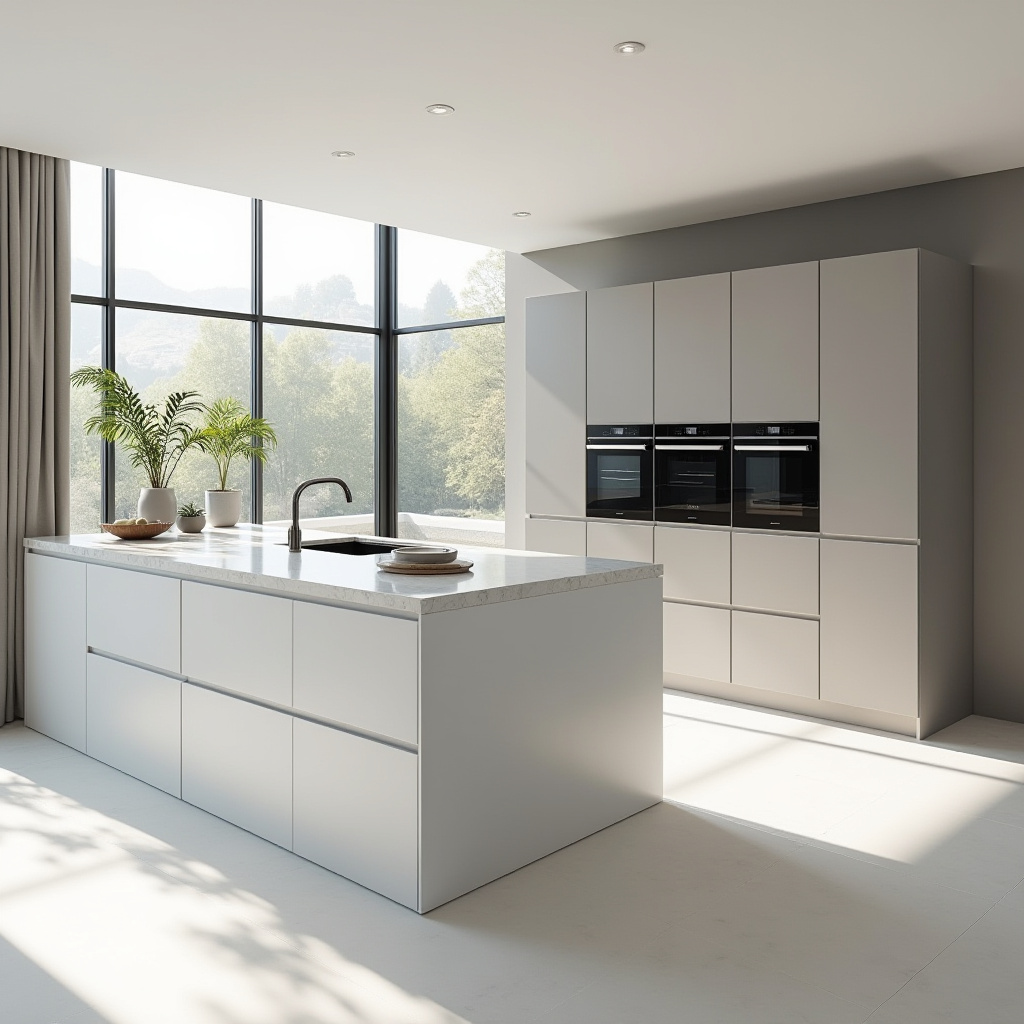
The kitchen is undeniably the soul of any home, where everyday cooking meets creative expression. Exploring innovative rectangle kitchen designs reveals how intentional planning can transform this vital space into a blend of elegance and practicality.
A well-designed kitchen layout not only supports culinary activities but also mirrors individual style, uplifting the home’s overall atmosphere.
From sleek contemporary styles to cozy rustic vibes, this guide offers a diverse range of rectangle kitchen inspirations tailored to various preferences and living situations. These designs demonstrate that with ingenuity and smart organization, even limited rectangular spaces can become culinary sanctuaries.
Discover 20 inspiring rectangle kitchen concepts that will spark ideas for your next renovation or build.
1. Sleek Minimalist Kitchen Featuring a Built-In Island
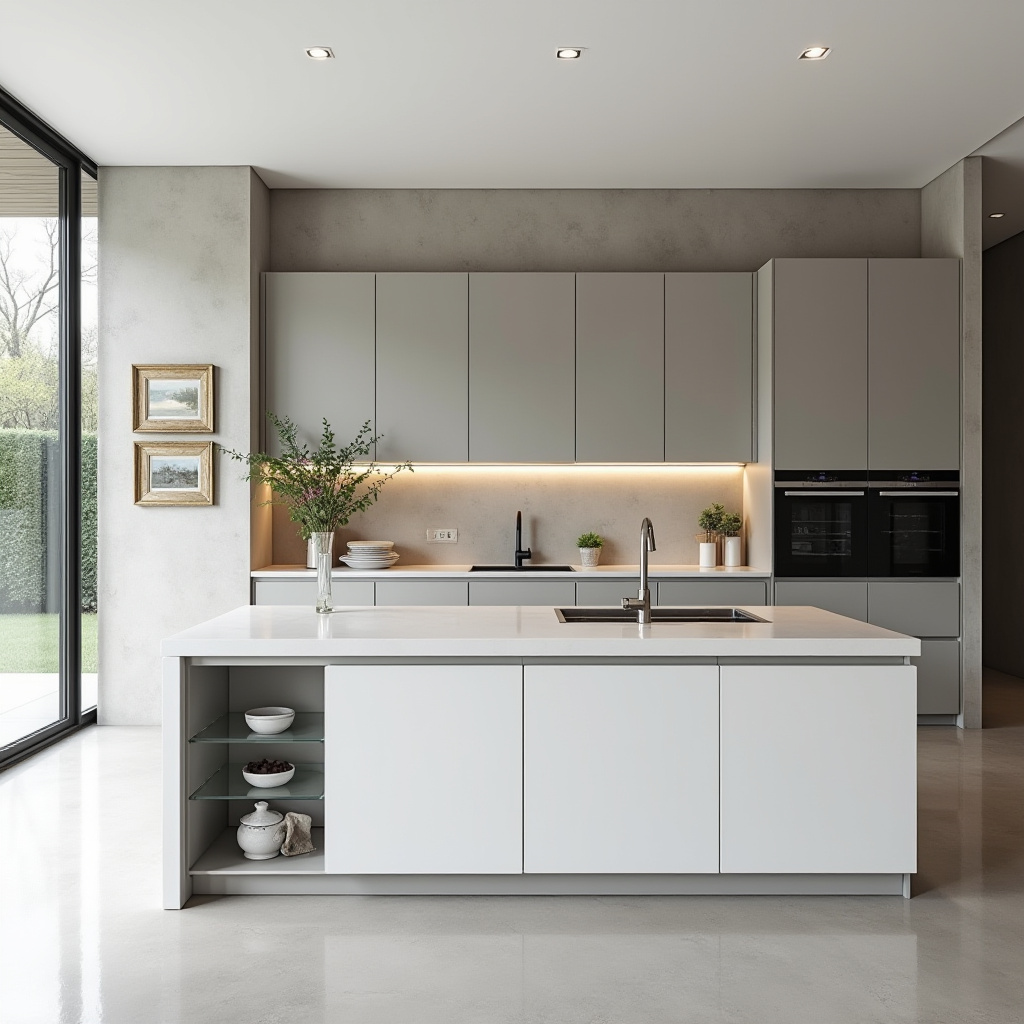
This contemporary minimalist kitchen impresses with its smooth white quartz surfaces and a seamlessly integrated rectangular island. The matte grey cabinetry, devoid of handles, offers a clean, uninterrupted aesthetic.
Concealed appliances maintain the streamlined look, while expansive windows bathe the space in natural light, accentuating the precise geometry and tactile richness of the materials.
Quartz countertops provide both a luxurious feel and resilience against daily use. The island doubles as a prep station and social hub, enhancing the kitchen’s versatility.
The ambiance is calm and uncluttered, perfect for enthusiasts of minimalist living.
- Choose handle-free cabinets to reinforce minimalism.
- Opt for durable quartz countertops for lasting elegance.
- Maximize daylight with large windows to open up the space.
- Design islands that serve multiple functions.
- Stick to neutral tones for a harmonious environment.
Expert Tip: Invest in multi-use furniture like islands to optimize space and functionality in compact kitchens.
2. Urban Compact Kitchen with Soft Sage Highlights
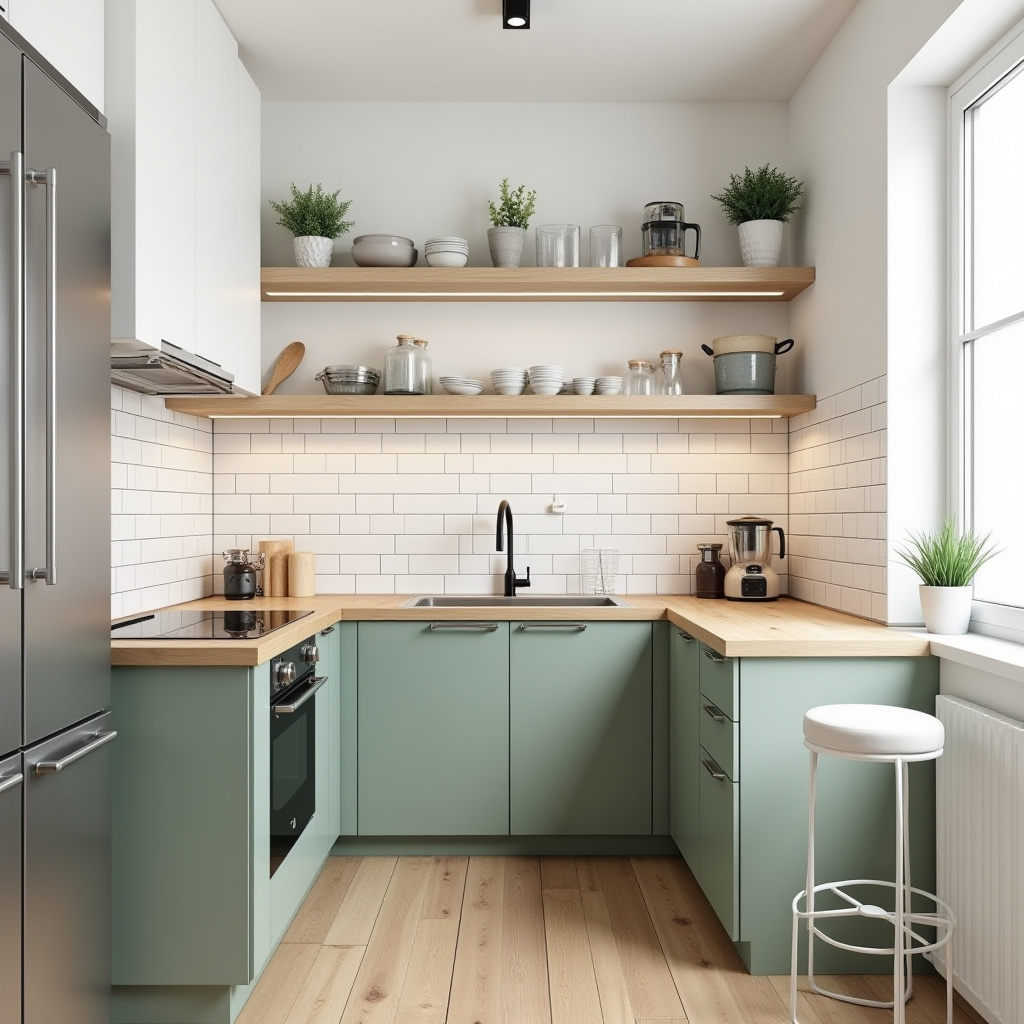
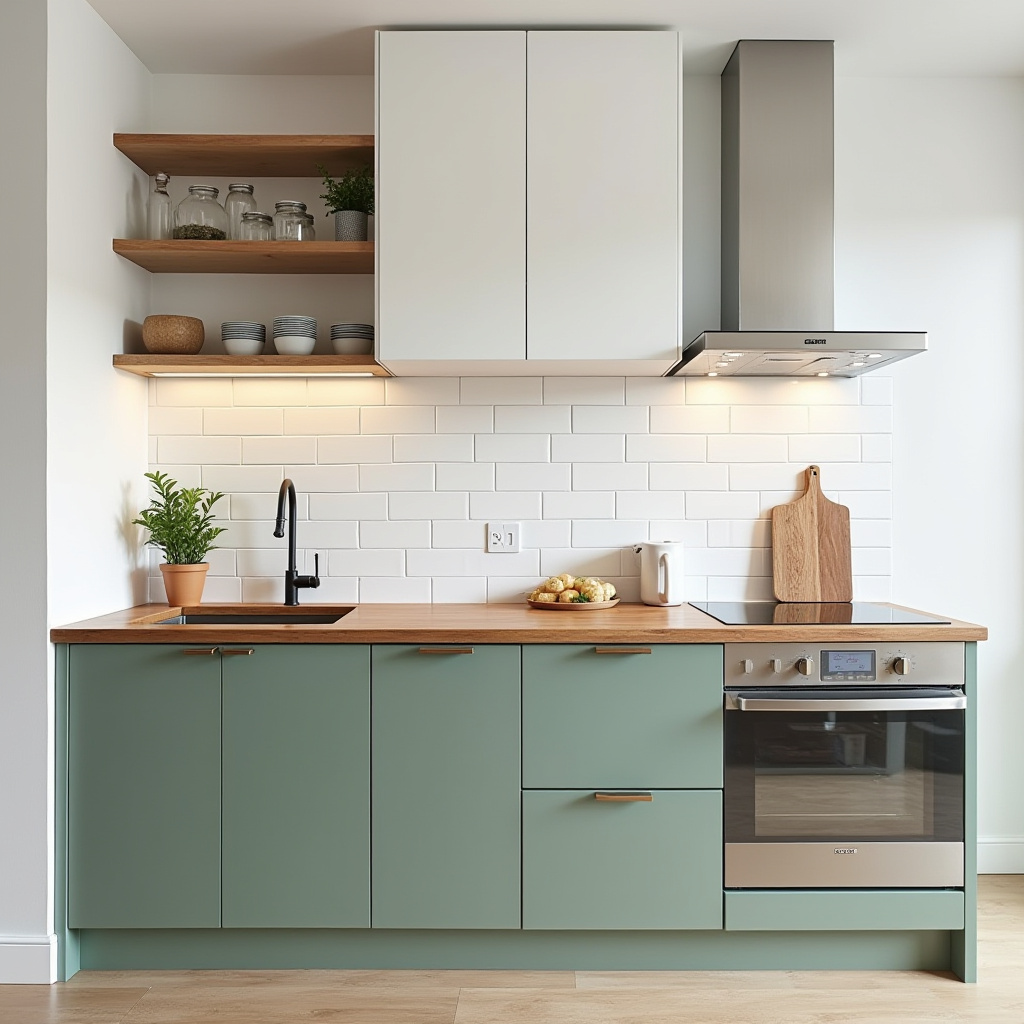
Designed for city living, this compact kitchen maximizes a rectangular footprint with sage green lower cabinets that bring freshness and warmth. Crisp white upper shelves contrast beautifully, enhancing the sense of space.
A butcher block countertop introduces natural texture, paired with stainless steel appliances that reinforce a modern aesthetic.
The white subway tile backsplash adds subtle texture and is easy to maintain, while open shelving showcases curated kitchenware, personalizing the space and preventing a cramped feel.
Ideal for urbanites seeking a cozy yet stylish culinary nook.
- Lighten upper cabinetry to visually expand the room.
- Incorporate wooden surfaces for warmth and character.
- Use open shelves to display favorite kitchen items.
- Optimize vertical storage with smart shelving.
- Select compact appliances that blend seamlessly.
Expert Tip: Balance open and closed storage to keep the kitchen tidy while highlighting personal touches.
3. Rustic Farmhouse Kitchen with Timeless Appeal
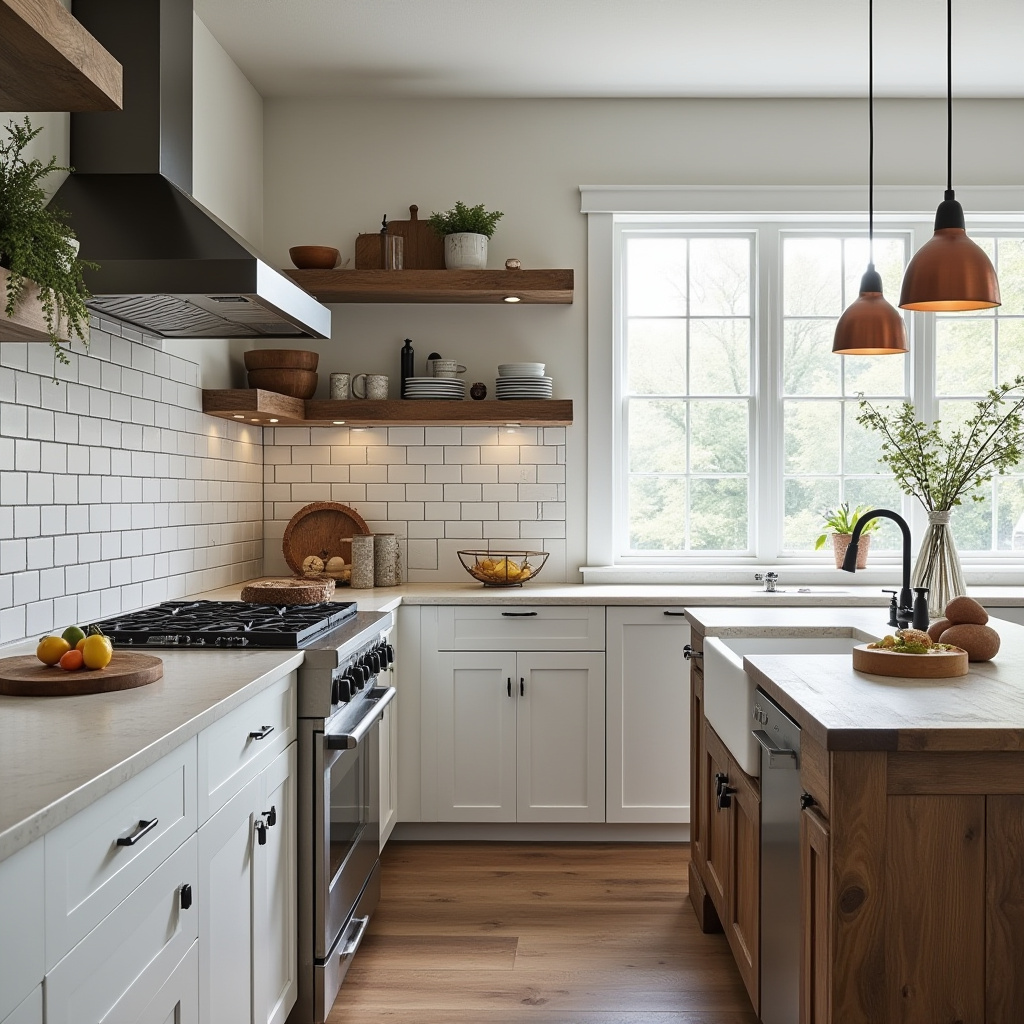
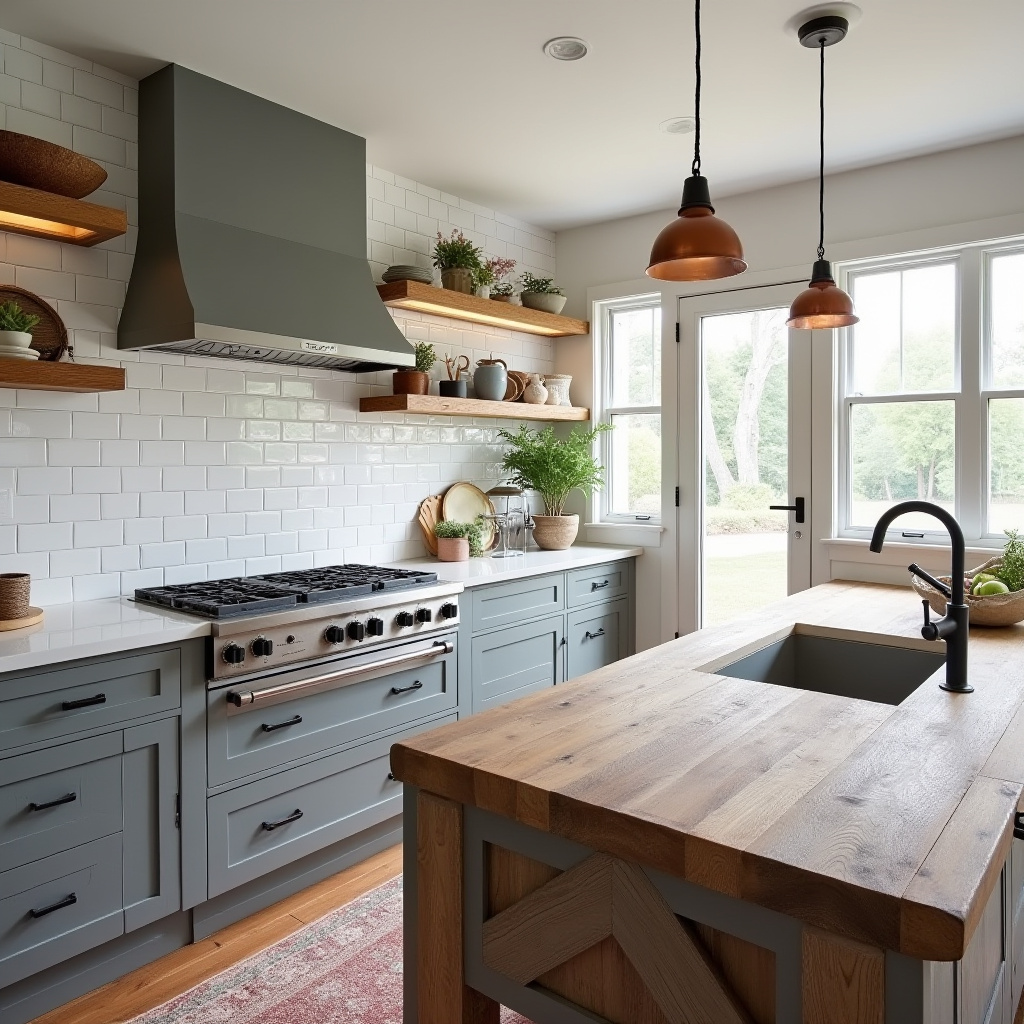
Embodying rustic charm, this farmhouse kitchen features a rectangular layout with classic white subway tiles and wooden floating shelves. The standout is a large distressed wood island that serves as both a centerpiece and a practical workspace.
Matte black fixtures and copper pendant lights add a refined contrast to the rustic elements.
The farmhouse sink enhances the traditional vibe while offering everyday convenience. Ample natural light streams through generous windows, creating an airy and welcoming environment.
This design harmonizes modern amenities with cozy farmhouse warmth, perfect for those who value comfort and character.
- Mix wood and metal for layered textures.
- Install a farmhouse sink for authenticity and function.
- Use floating shelves to display essentials and decor.
- Choose accent lighting that complements rustic tones.
- Leverage natural light to amplify warmth.
Expert Tip: Incorporate reclaimed wood accents to add unique history and personality.
4. Scandinavian Minimalism with Natural Warmth
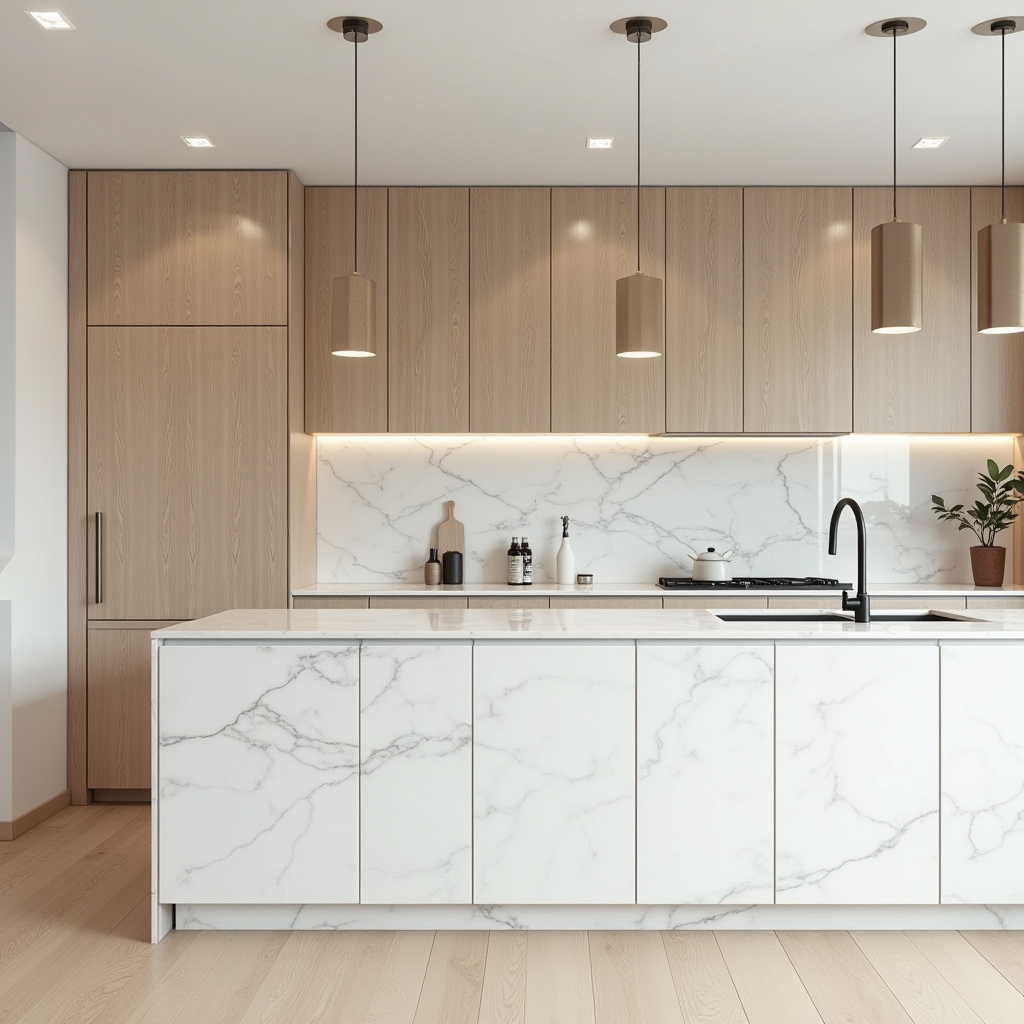
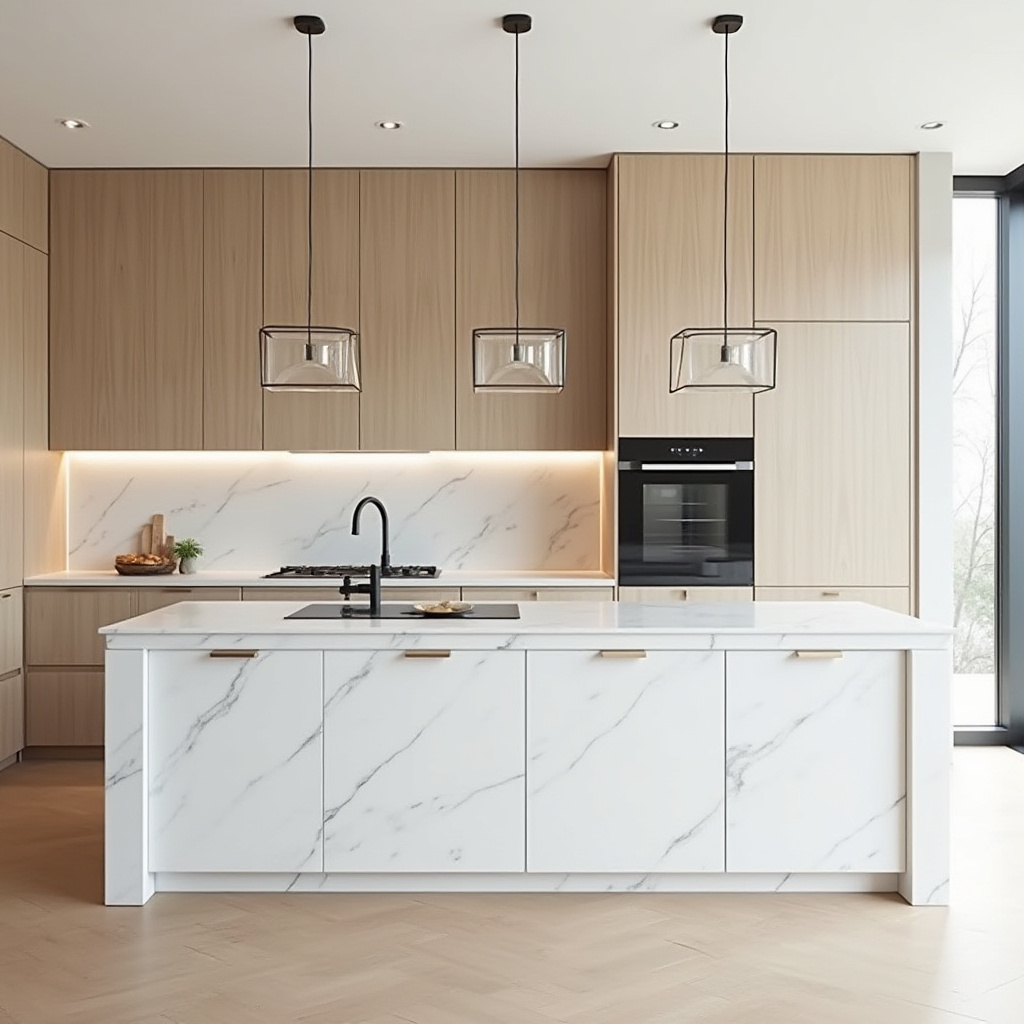
This kitchen draws inspiration from Scandinavian design, featuring white marble countertops and light oak cabinetry that exude simplicity and warmth. Built-in appliances maintain the clean, streamlined look.
Rectangular pendant lights provide subtle illumination, complementing the natural materials and minimalist layout.
Thoughtful organization and functional design create a peaceful space ideal for cooking and socializing. The oak cabinetry adds inviting warmth without overwhelming the room.
Perfect for those who value understated elegance and practicality.
- Use natural wood to soften minimalist spaces.
- Integrate appliances for a seamless appearance.
- Choose simple pendant lighting to enhance minimalism.
- Stick to neutral tones for a calming effect.
- Prioritize functionality for everyday ease.
Expert Tip: Employ hidden storage solutions like pull-out drawers to keep surfaces clutter-free.
5. Industrial Loft Kitchen with Bold Urban Style
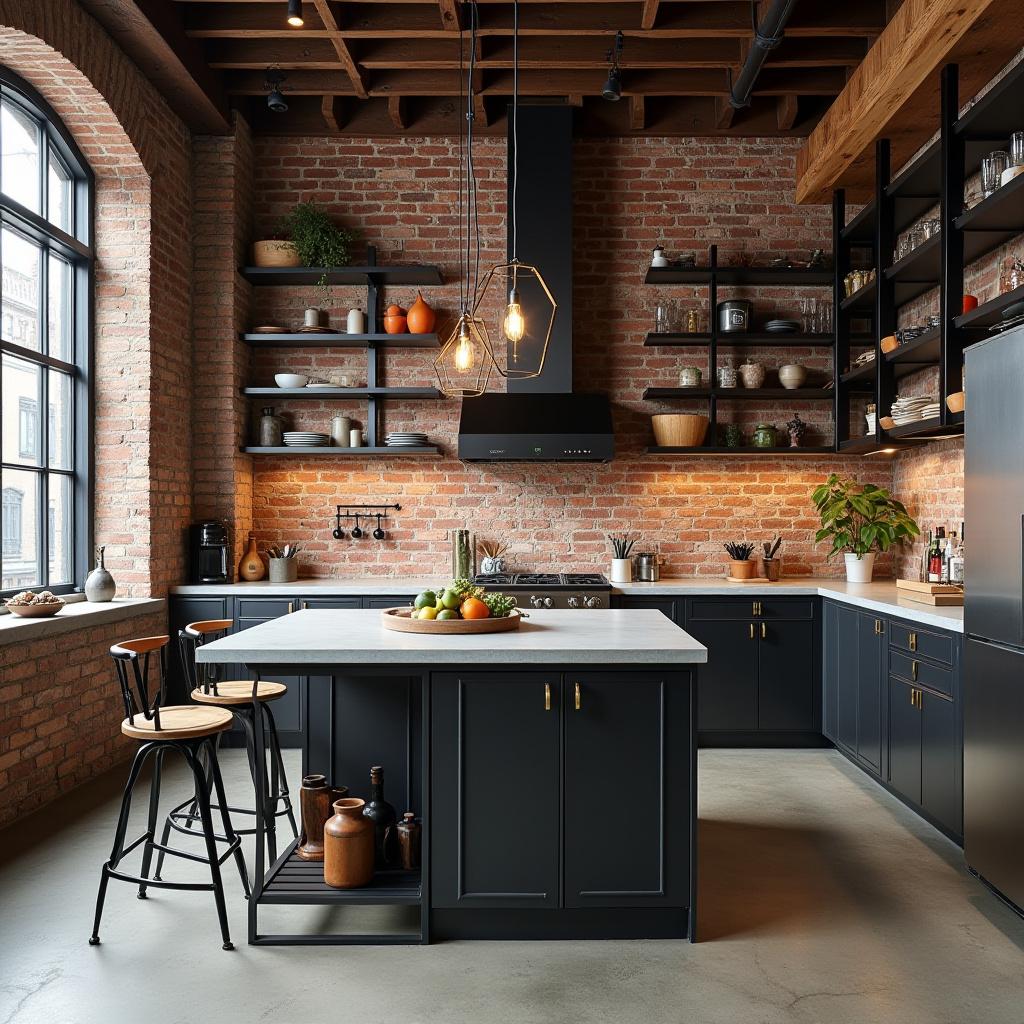
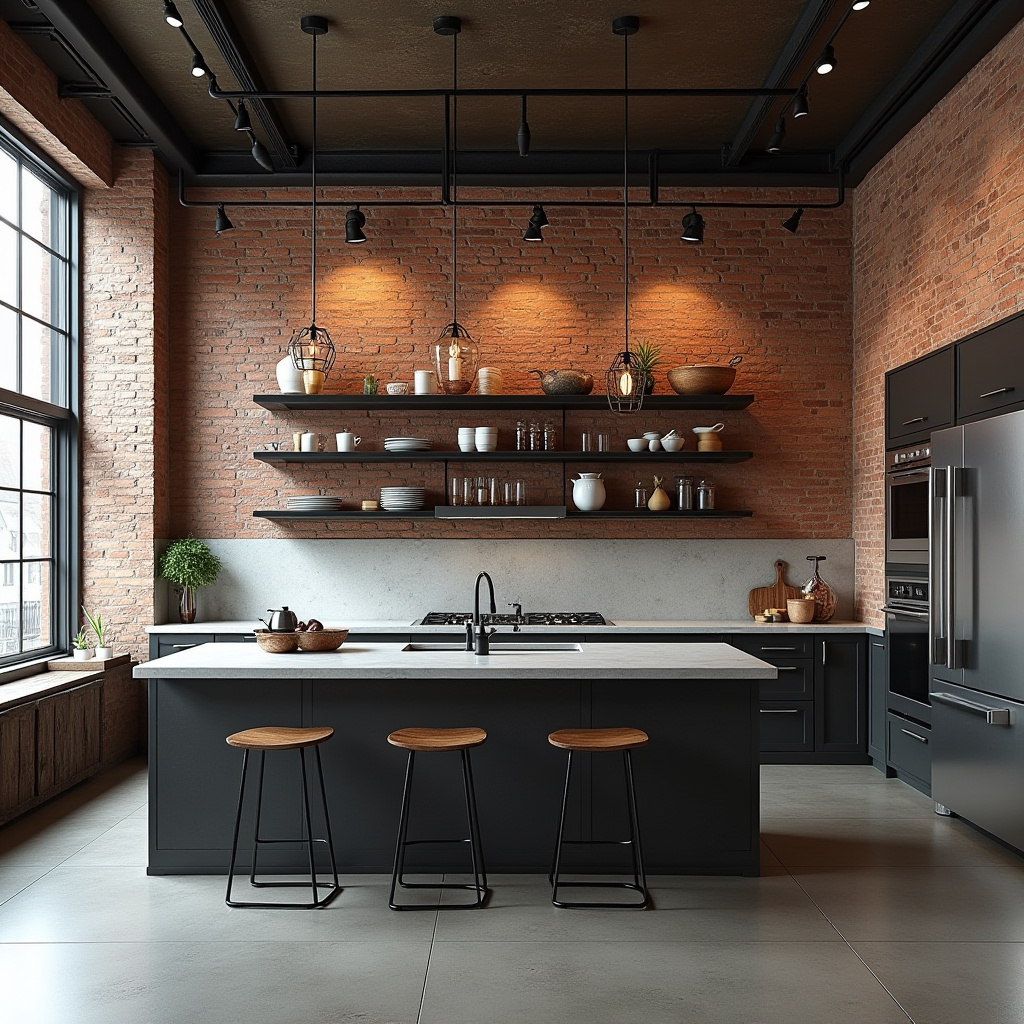
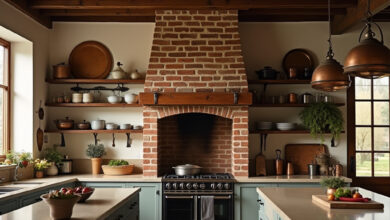
Featuring exposed brick walls and concrete countertops, this industrial loft kitchen exudes raw urban energy. Black metal shelving contrasts with the warm brick, displaying stylish dishware and accessories.
Stainless steel appliances blend effortlessly into the design, while geometric pendant lights add a modern edge.
Reclaimed wood accents introduce warmth, balancing the industrial materials. Large windows flood the space with daylight, highlighting the interplay of textures.
Ideal for city dwellers who appreciate a fusion of rugged and refined elements.
- Highlight raw materials like brick and concrete.
- Use open shelving to showcase curated kitchenware.
- Select statement lighting to define the space.
- Balance cold materials with warm wood accents.
- Maximize daylight to enhance textures.
Expert Tip: Blend warm and cool tones in your palette for a dynamic yet cohesive look.
6. Mediterranean Kitchen with Rich, Warm Textures
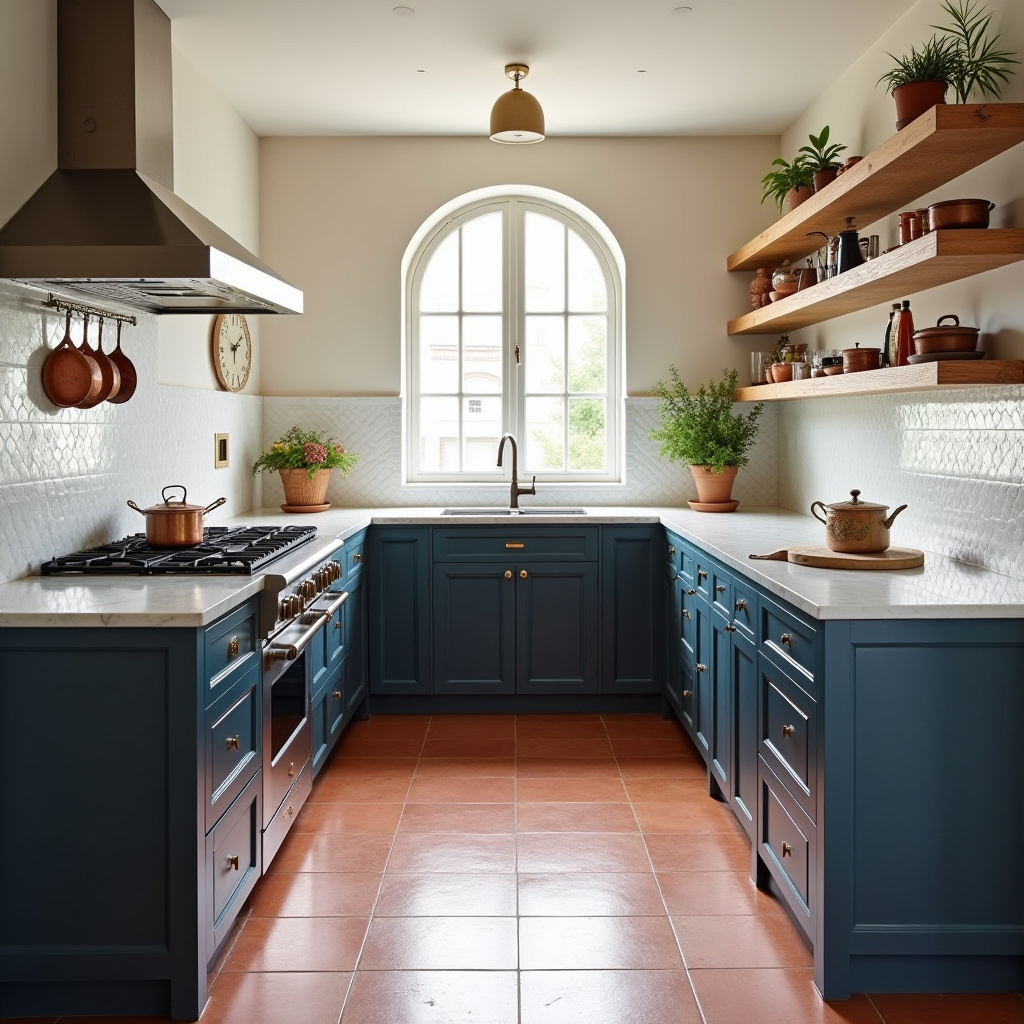
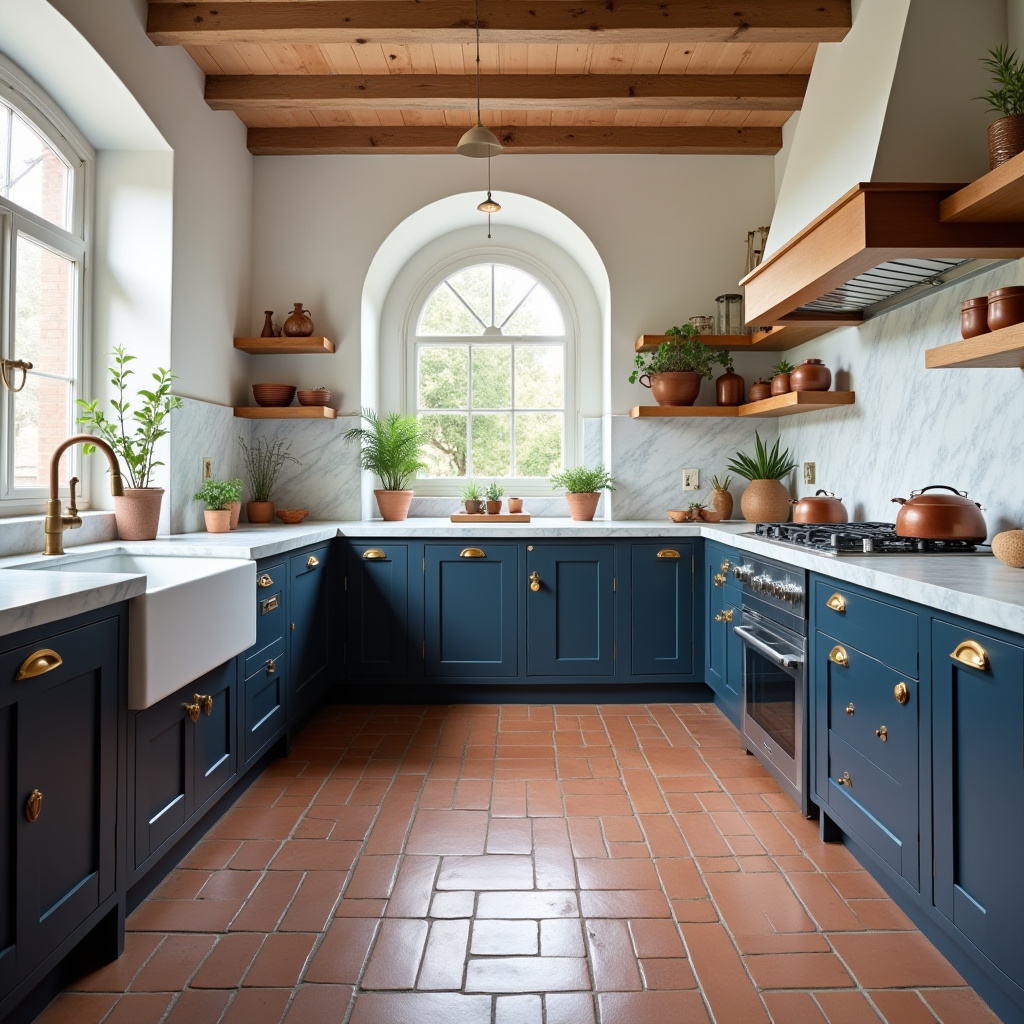
This Mediterranean-inspired kitchen bursts with color and texture, featuring terracotta floor tiles that radiate warmth. White marble counters contrast beautifully with deep blue cabinetry, evoking coastal charm.
An arched window invites gentle sunlight, enhancing the welcoming vibe.
Copper cookware on display adds elegance, while open shelves adorned with ceramics create a curated, personal touch.
Perfect for those who desire a lively and inviting cooking space.
- Use terracotta tiles for warmth and texture.
- Combine contrasting colors for visual appeal.
- Showcase cookware as decorative elements.
- Maximize natural light with large windows.
- Incorporate Mediterranean-inspired decor.
Expert Tip: Add a small indoor herb garden to infuse freshness and aroma into your kitchen.
7. Space-Saving Kitchen with Fold-Down Dining Table
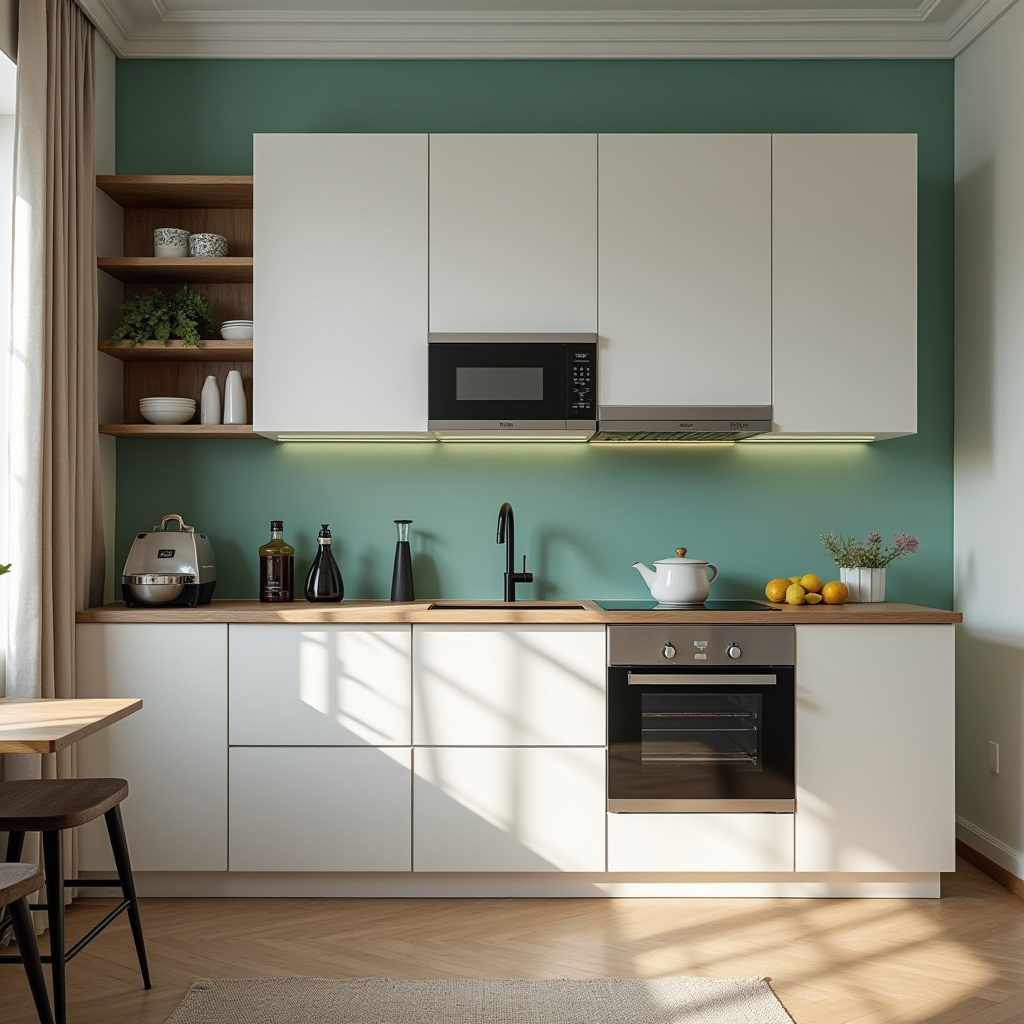
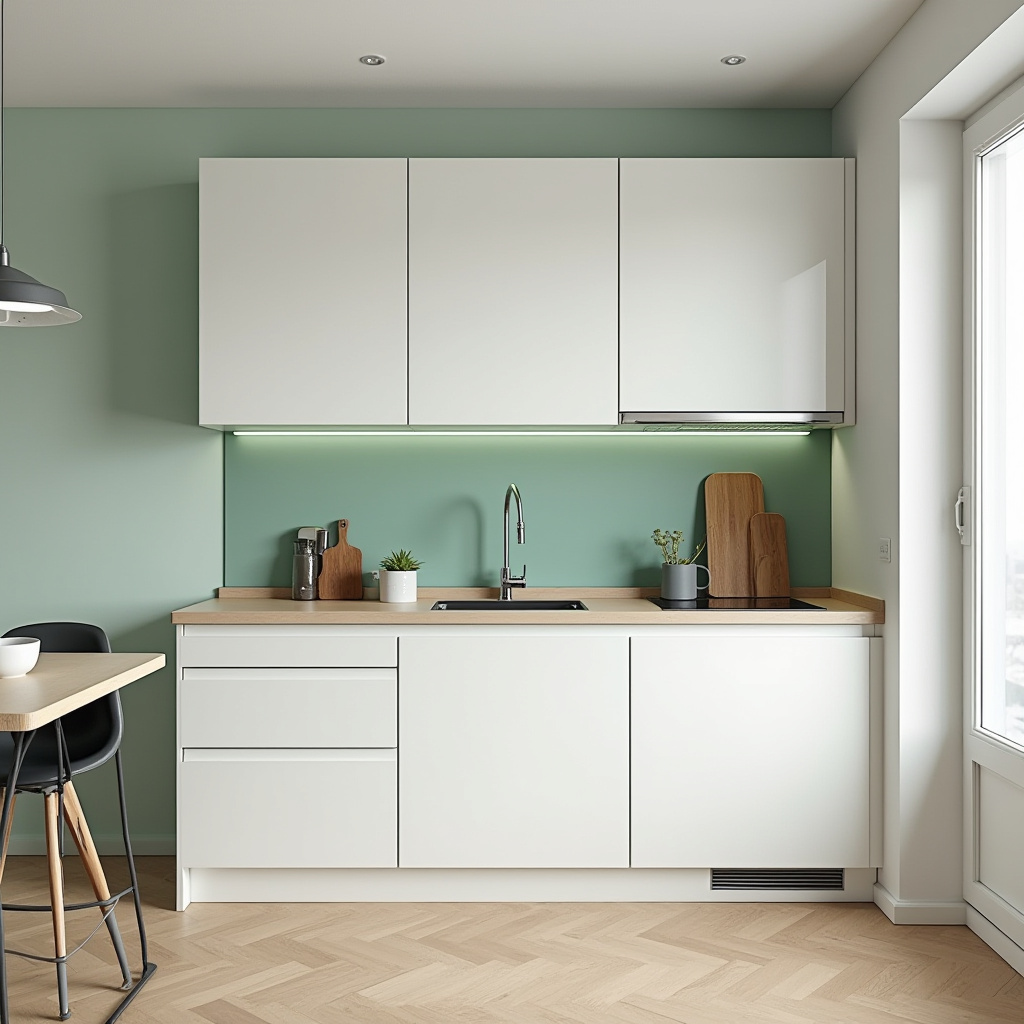
Ideal for compact apartments, this kitchen features a rectangular layout with a smart fold-down dining table that optimizes space. Glossy white cabinets provide a sleek, modern look, while mint green walls add a refreshing splash of color.
Integrated appliances maintain a clean, uncluttered appearance.
Innovative storage solutions like magnetic knife holders and pull-out drawers keep the kitchen organized without sacrificing style.
Perfect for those who enjoy entertaining in intimate settings.
- Incorporate fold-down furniture to save space.
- Use glossy finishes for a contemporary feel.
- Add accent colors to enliven the design.
- Implement smart storage for efficiency.
- Maximize vertical space with wall-mounted options.
Expert Tip: Choose multi-purpose tables that double as prep areas to enhance functionality.
8. Japanese-Inspired Kitchen Emphasizing Simplicity
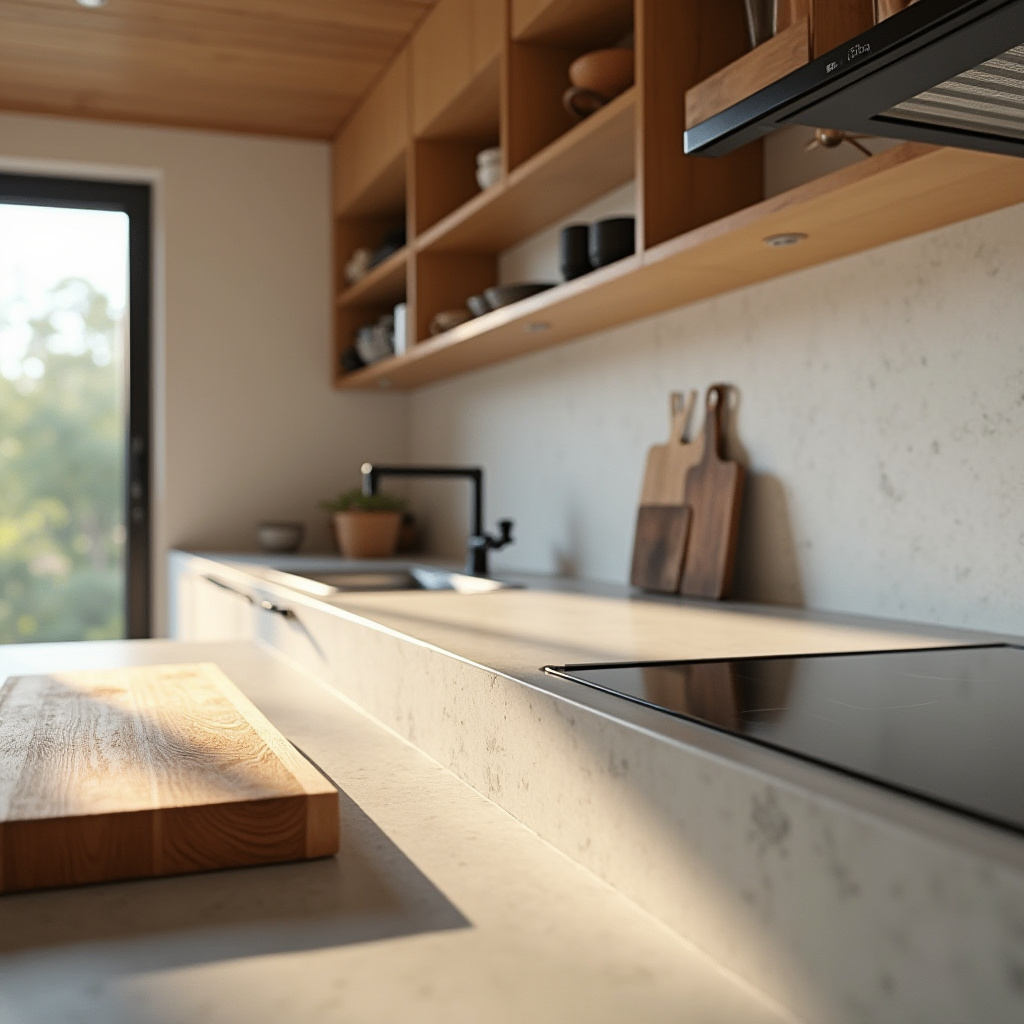
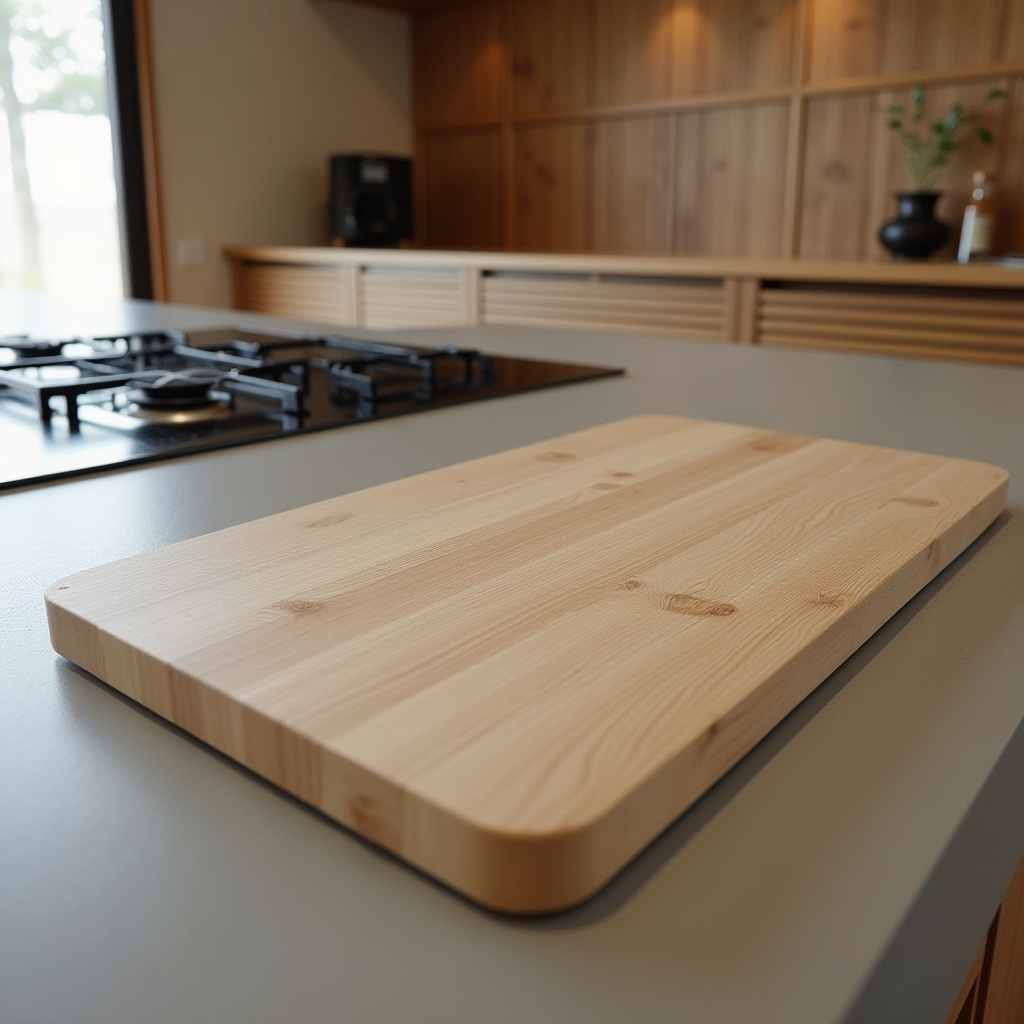
This kitchen reflects Japanese minimalism, featuring bamboo cabinetry, light grey concrete counters, and a wooden cutting board that emphasizes natural materials. Integrated induction cooktops and minimal decor foster a zen-like atmosphere.
Soft light filtering through shoji-style windows enhances the tranquil environment, ideal for mindful cooking.
- Use bamboo and wood for warmth and authenticity.
- Employ soft lighting to cultivate calmness.
- Keep decorations minimal to maintain serenity.
- Integrate smart appliances for efficiency.
- Design open layouts to improve flow.
Expert Tip: Add a small indoor plant area to bring nature inside and boost tranquility.
9. Coastal Kitchen with Nautical Inspirations
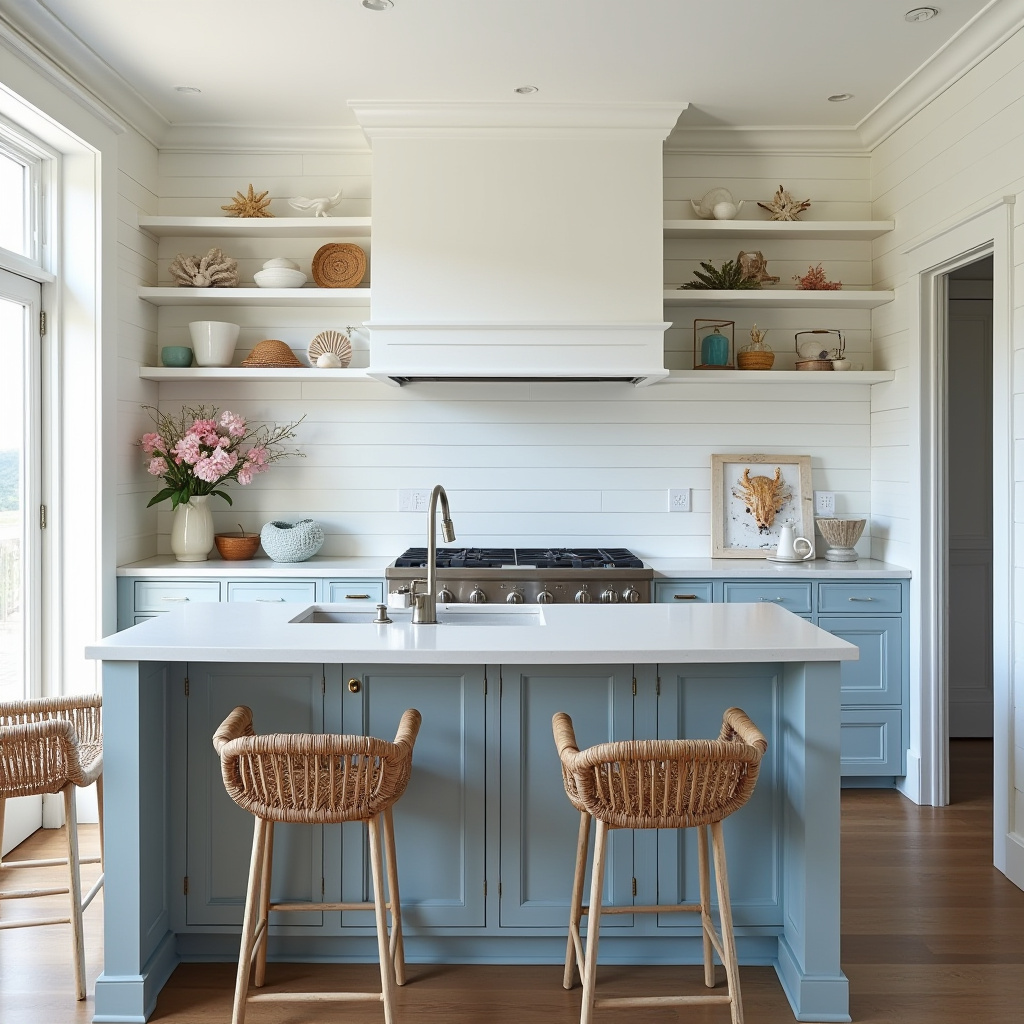
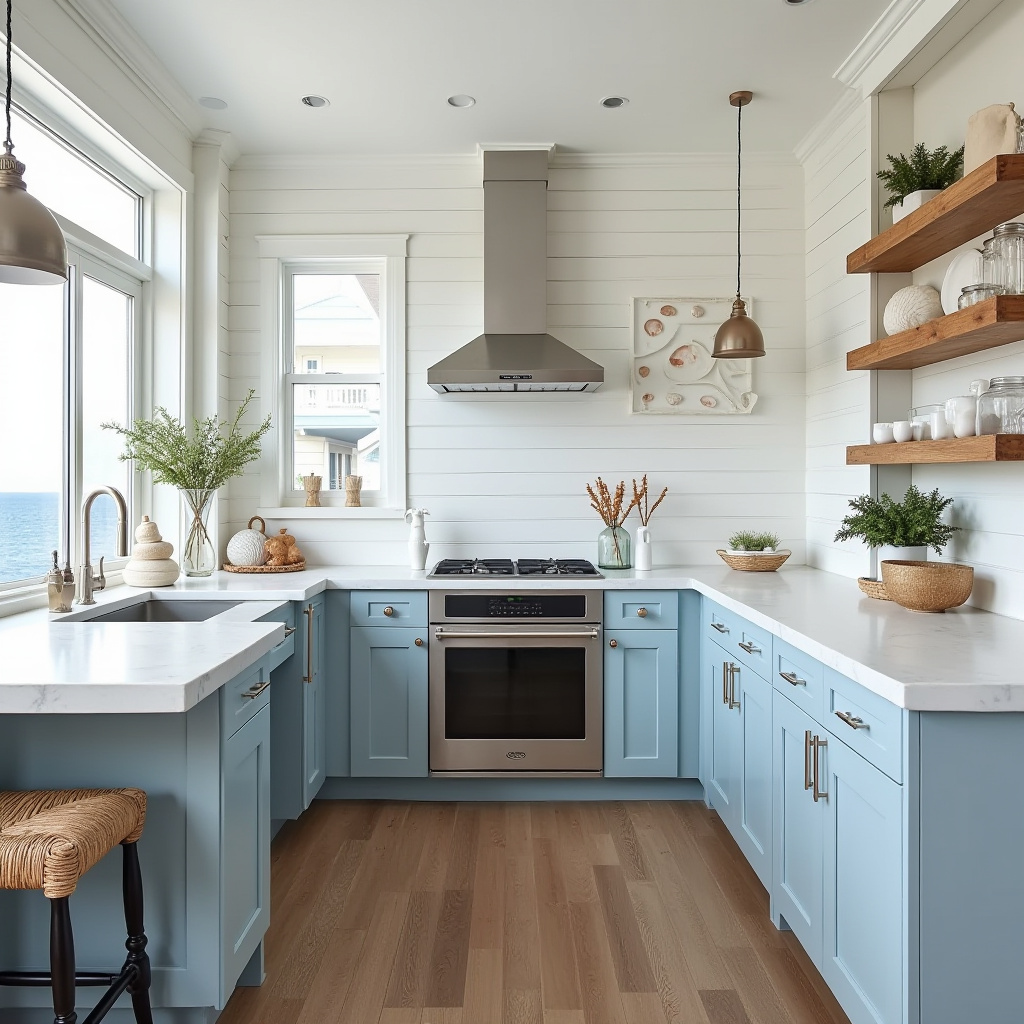
Evoking seaside serenity, this coastal kitchen features white shiplap walls and soft blue lower cabinets. White quartz countertops and woven bar stools add elegance and texture.
Open shelving displays beach-themed decor like seashells, enhancing the relaxed vibe. Large windows flood the space with natural light, while nautical hardware adds subtle charm.
- Use shiplap for classic coastal texture.
- Incorporate soft blues to evoke the ocean.
- Display coastal decor on open shelves.
- Maximize sunlight with large windows.
- Choose nautical-inspired hardware.
Expert Tip: Opt for marine-grade materials to ensure durability in humid coastal environments.
10. Eco-Conscious Kitchen with Sustainable Features
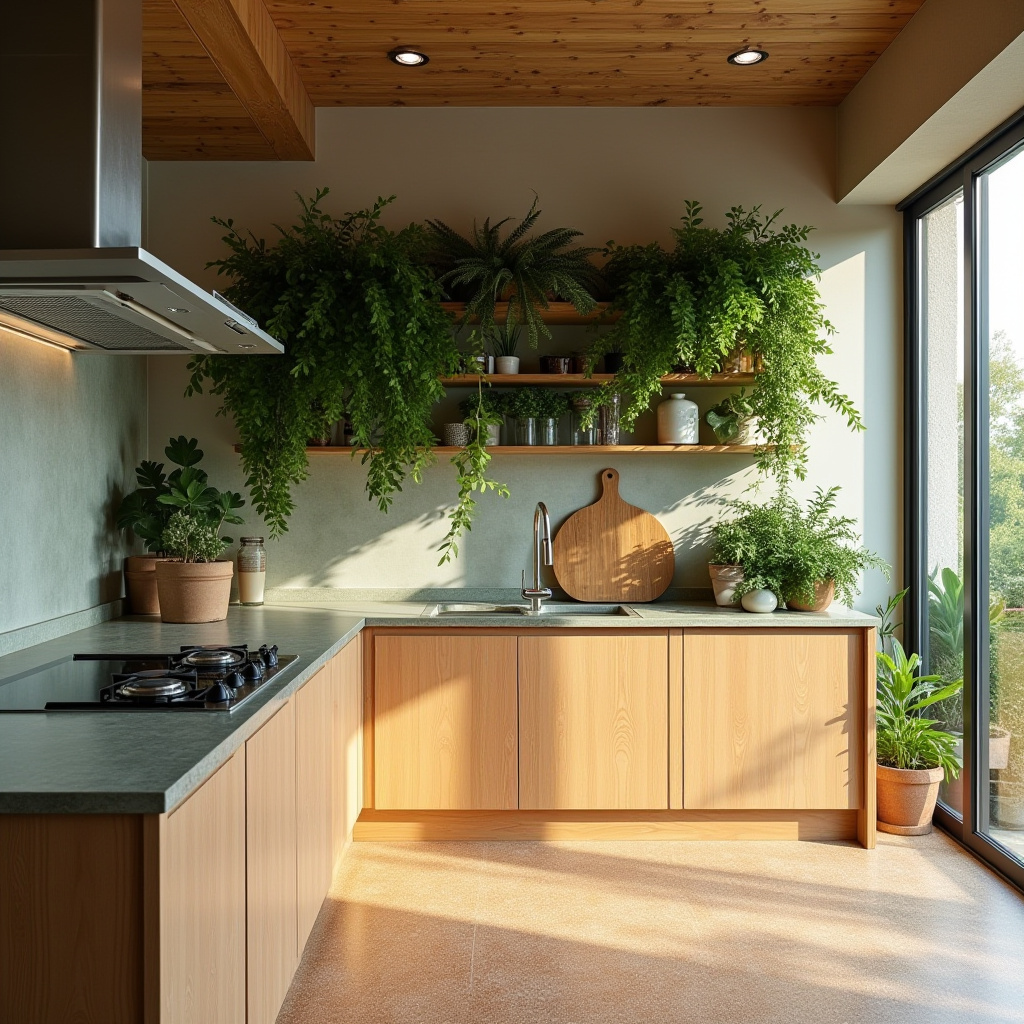
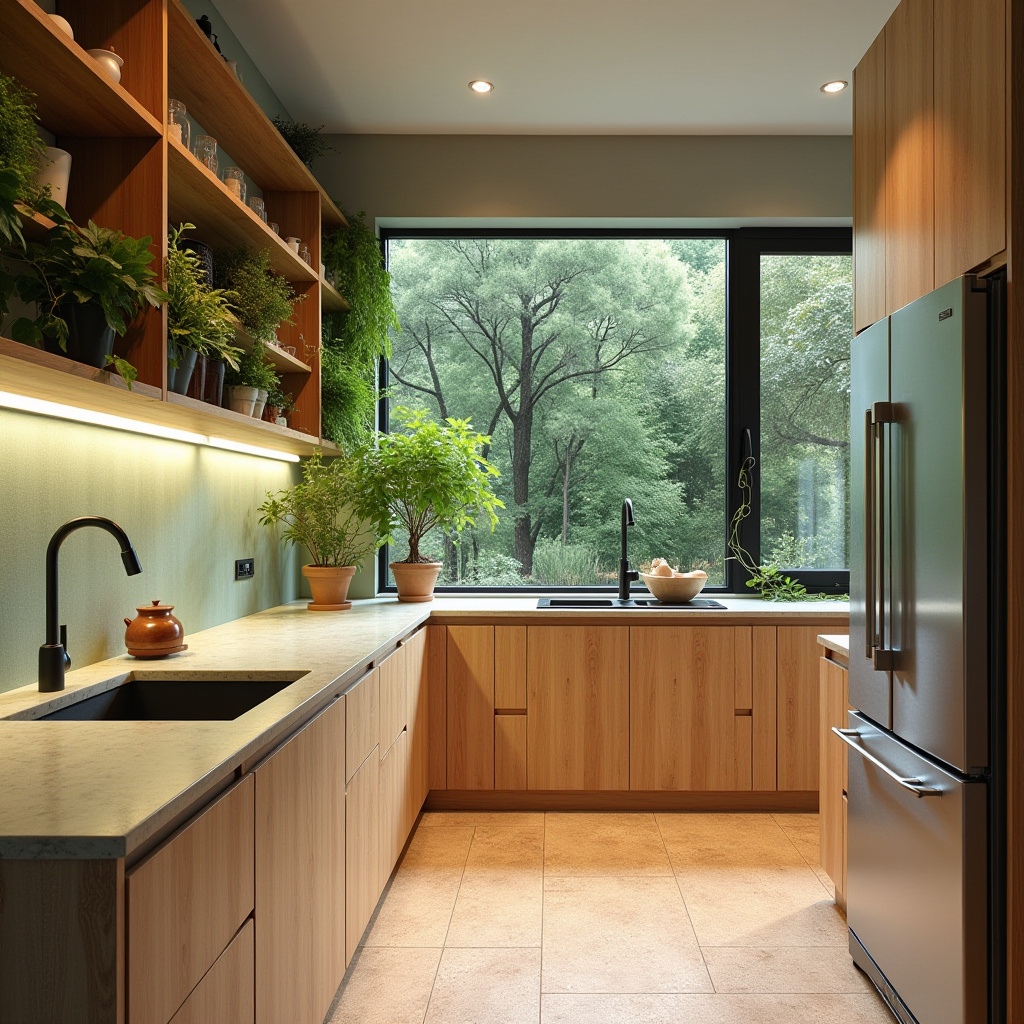
Championing sustainability, this kitchen features recycled glass countertops and bamboo cabinetry. Energy-efficient appliances reduce environmental impact without sacrificing style.
A living herb wall provides fresh ingredients, while cork flooring adds eco-friendly warmth. Soft lighting enhances the inviting atmosphere.
- Use recycled materials for surfaces and cabinetry.
- Choose energy-saving appliances.
- Incorporate a living herb wall for freshness.
- Opt for natural flooring like cork.
- Use gentle lighting to create warmth.
Expert Tip: Source eco-friendly materials locally to minimize your kitchen’s carbon footprint.
11. Mid-Century Modern Kitchen with Retro Accents
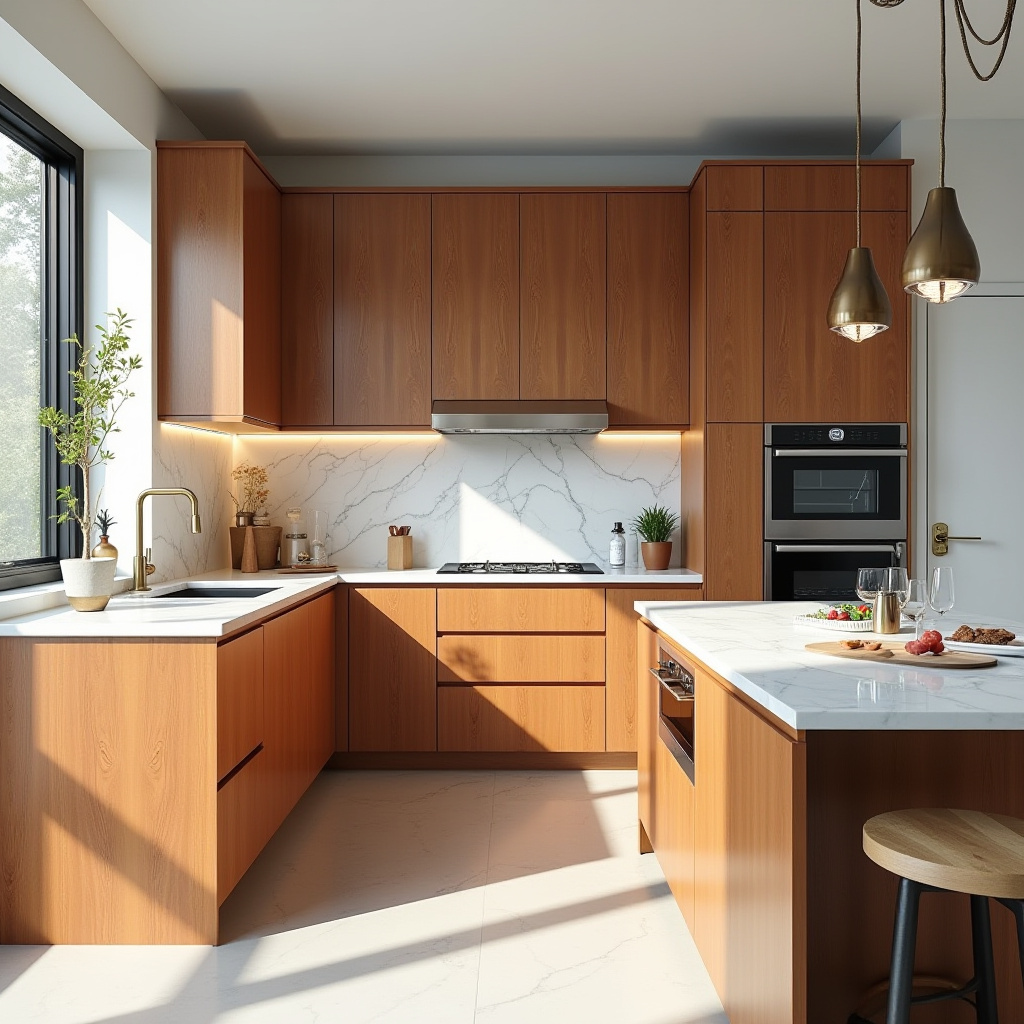
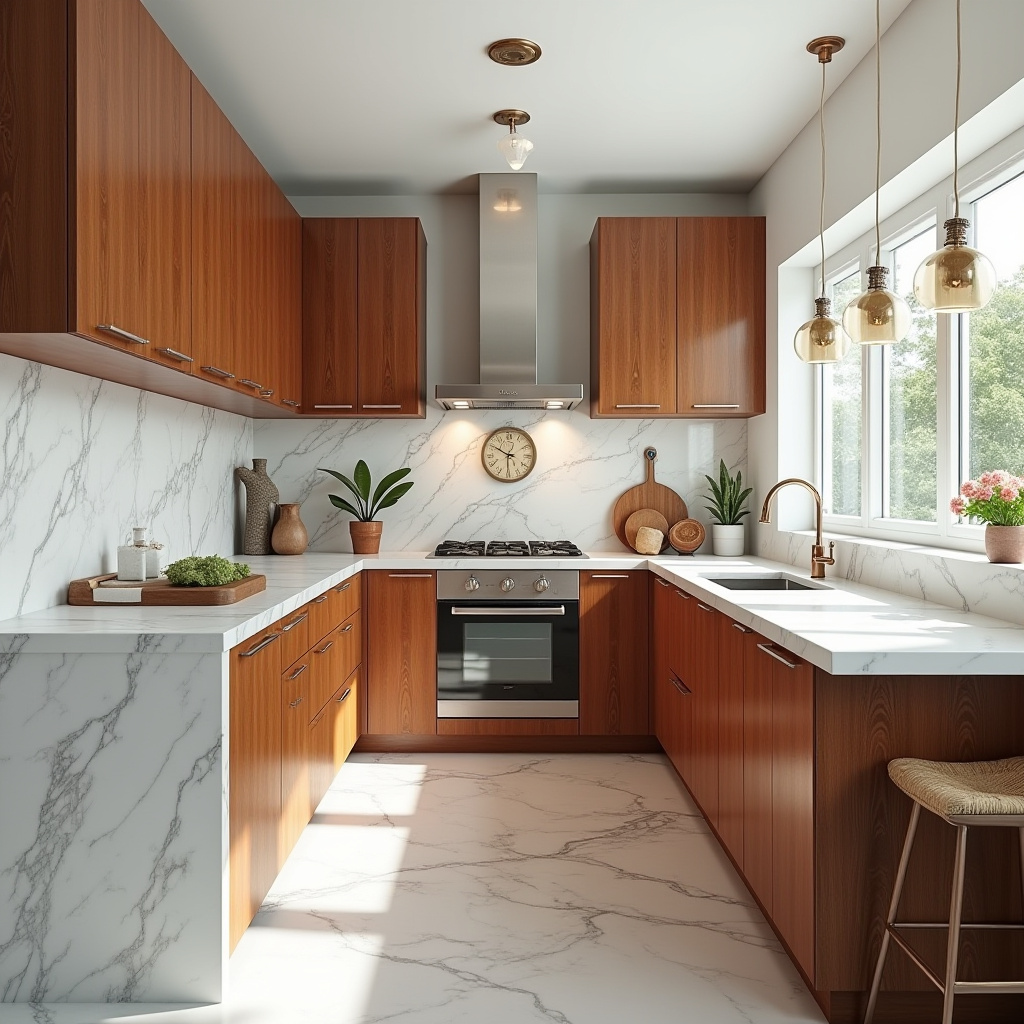
This kitchen channels mid-century modern style with teak wood cabinetry and white marble counters. A geometric backsplash adds flair, while retro appliances and sunburst clocks evoke nostalgic charm.
Natural light highlights the warm wood tones, creating a welcoming space that balances vintage style with modern function.
- Incorporate retro appliances for character.
- Use geometric patterns for visual interest.
- Choose warm wood finishes.
- Select lighting that reflects mid-century design.
- Maximize daylight to enhance warmth.
Expert Tip: Hunt for vintage pieces to add unique personality to your kitchen.
12. Eclectic Bohemian Kitchen with Artistic Flair
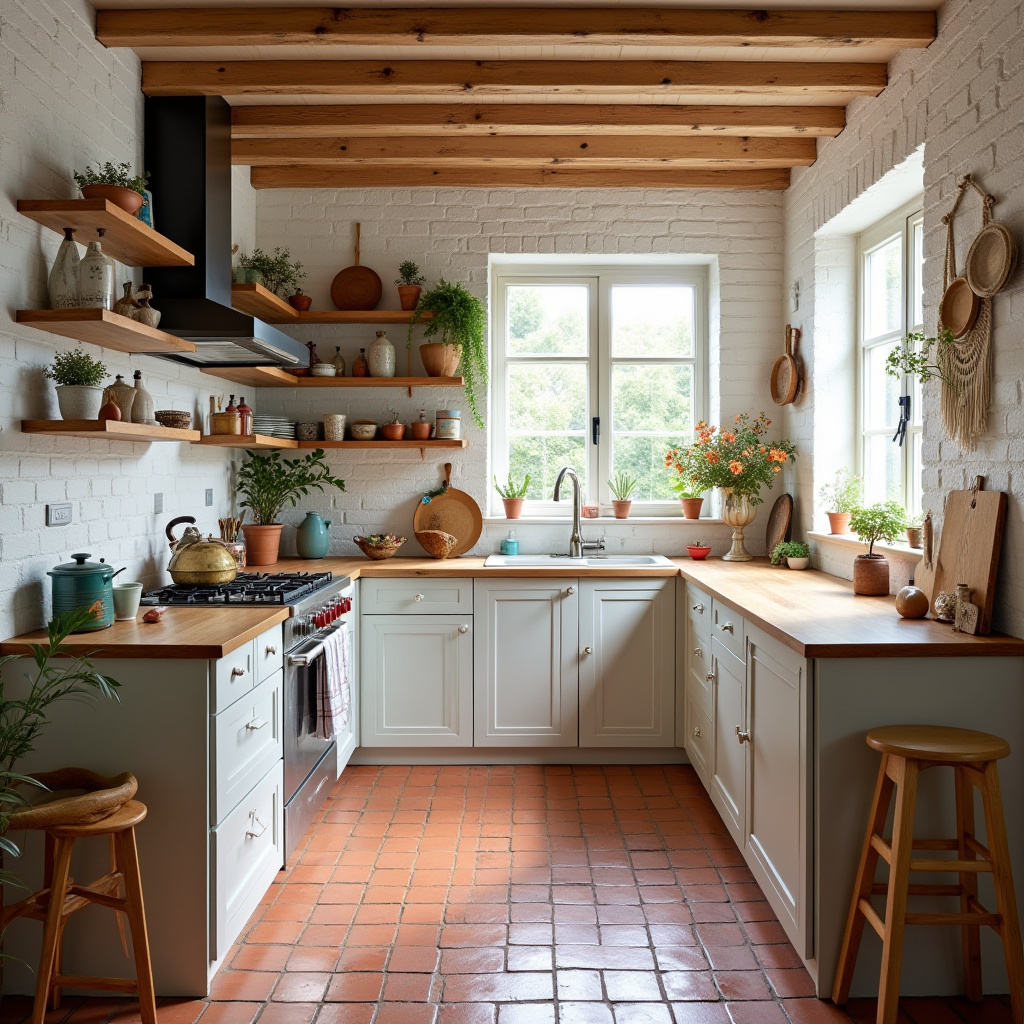
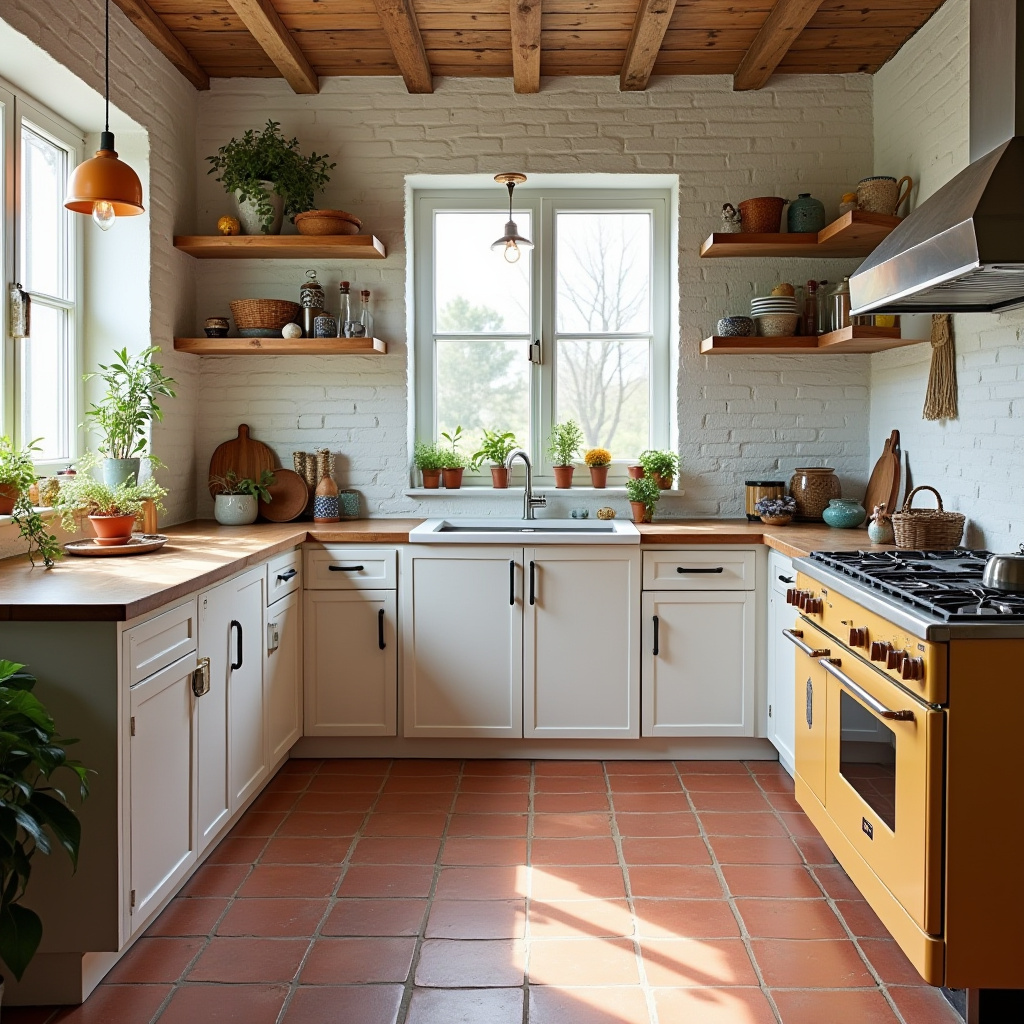
Celebrating color and texture, this bohemian kitchen features terracotta floors and white brick walls. Open wooden shelves display vibrant ceramics, while macramé wall hangings add artistic charm.
Vintage appliances contribute to the eclectic vibe, and natural light creates a warm, inviting atmosphere.
- Use colorful accessories for personality.
- Incorporate terracotta tiles for warmth.
- Display artful items on open shelving.
- Choose vintage appliances for character.
- Maximize natural light for a welcoming feel.
Expert Tip: Layer textiles and patterns to enrich the bohemian aesthetic.
13. Modern Farmhouse Kitchen with Industrial Accents
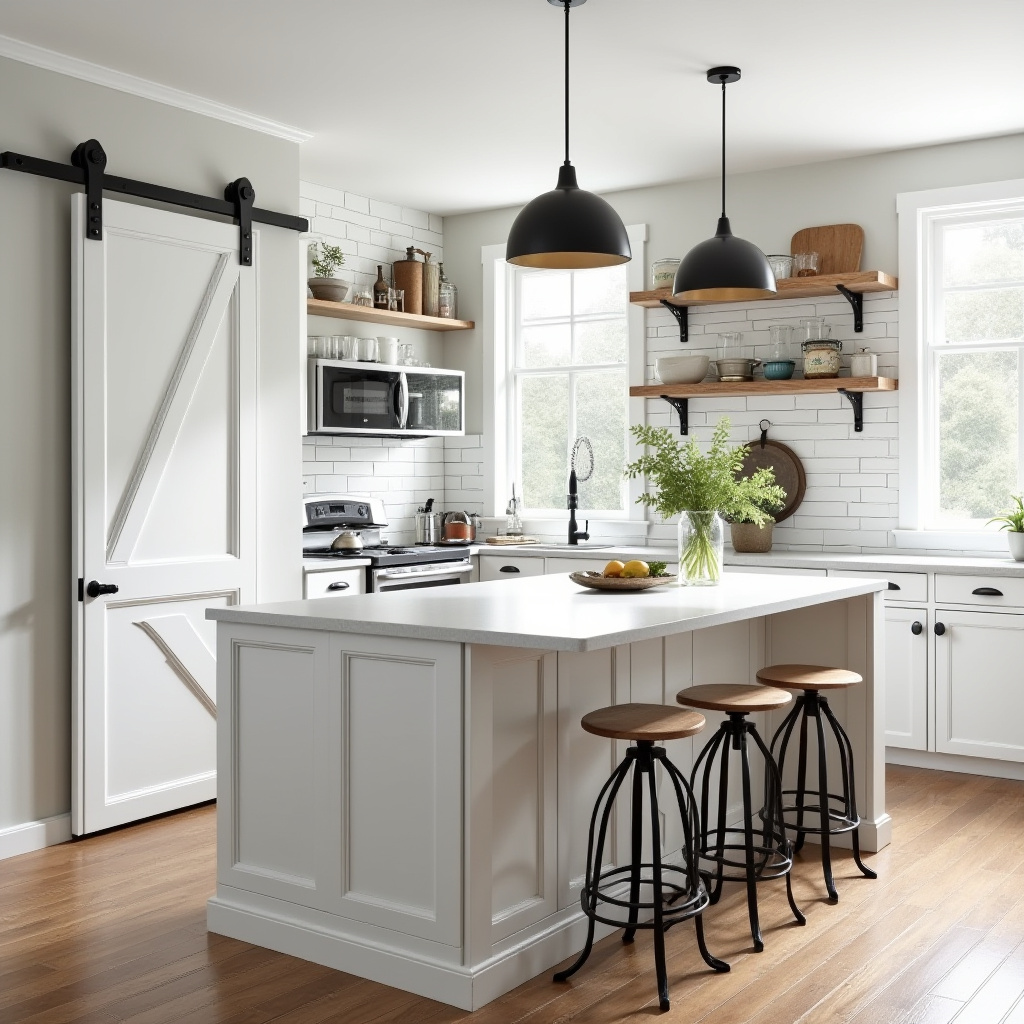
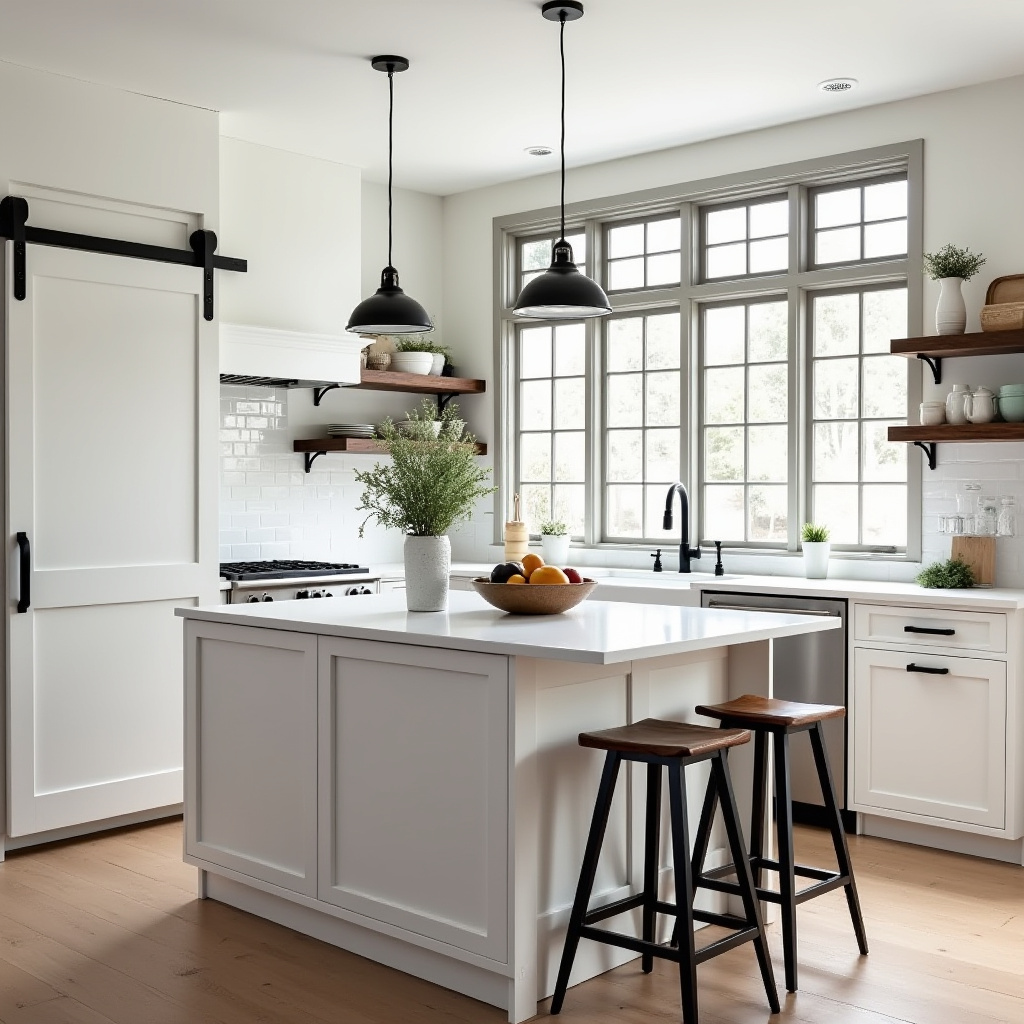
This kitchen merges modern design with rustic farmhouse elements. Rectangular shaker cabinets and white quartz counters create a polished look, while black metal hardware adds industrial flair.
A sliding barn door serves as a charming focal point, complemented by industrial-style bar stools. Open shelves display vintage kitchenware, adding warmth and personality.
- Use sliding barn doors for rustic appeal.
- Showcase vintage items on open shelving.
- Choose contrasting hardware for modern edge.
- Maximize natural light with large windows.
- Blend industrial and farmhouse styles for balance.
Expert Tip: Select a warm neutral palette with modern accents for timeless cohesion.
14. Monochrome Minimalist Kitchen with Subtle Texture
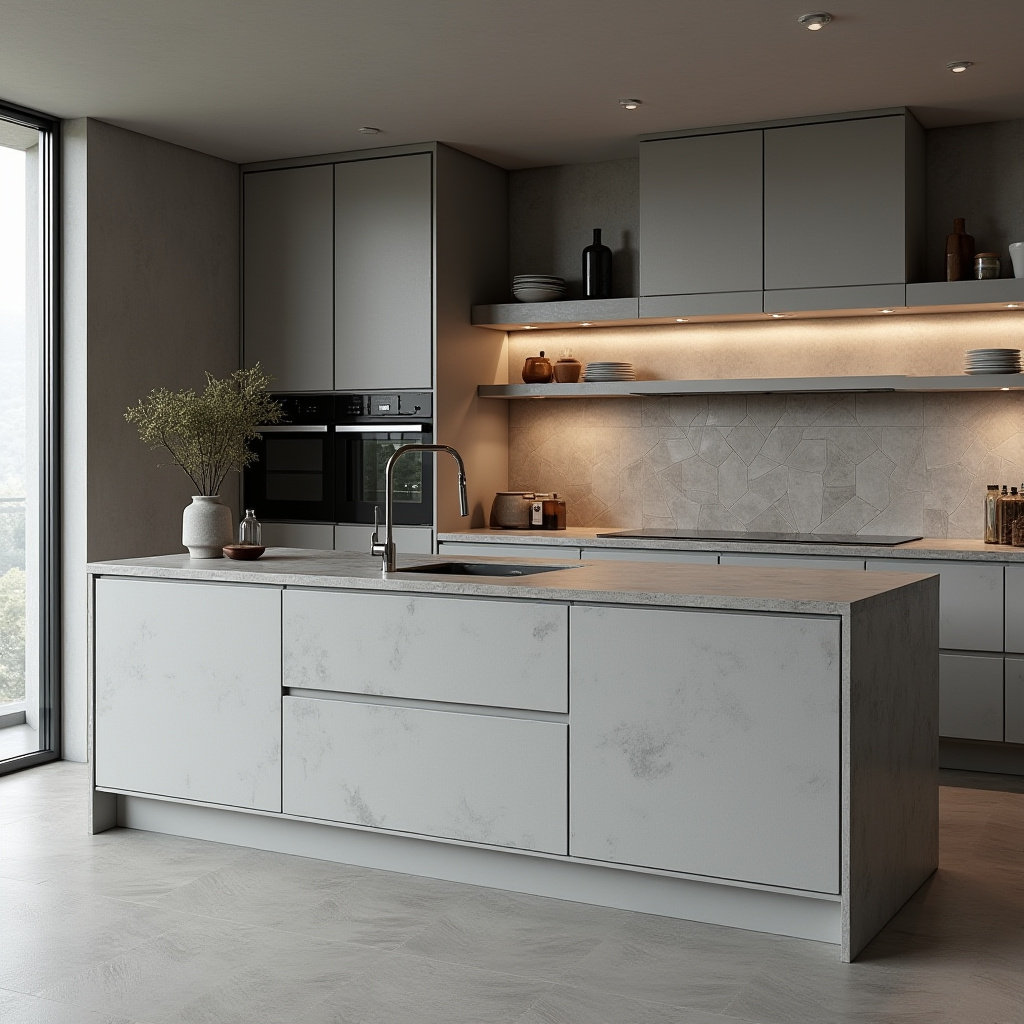
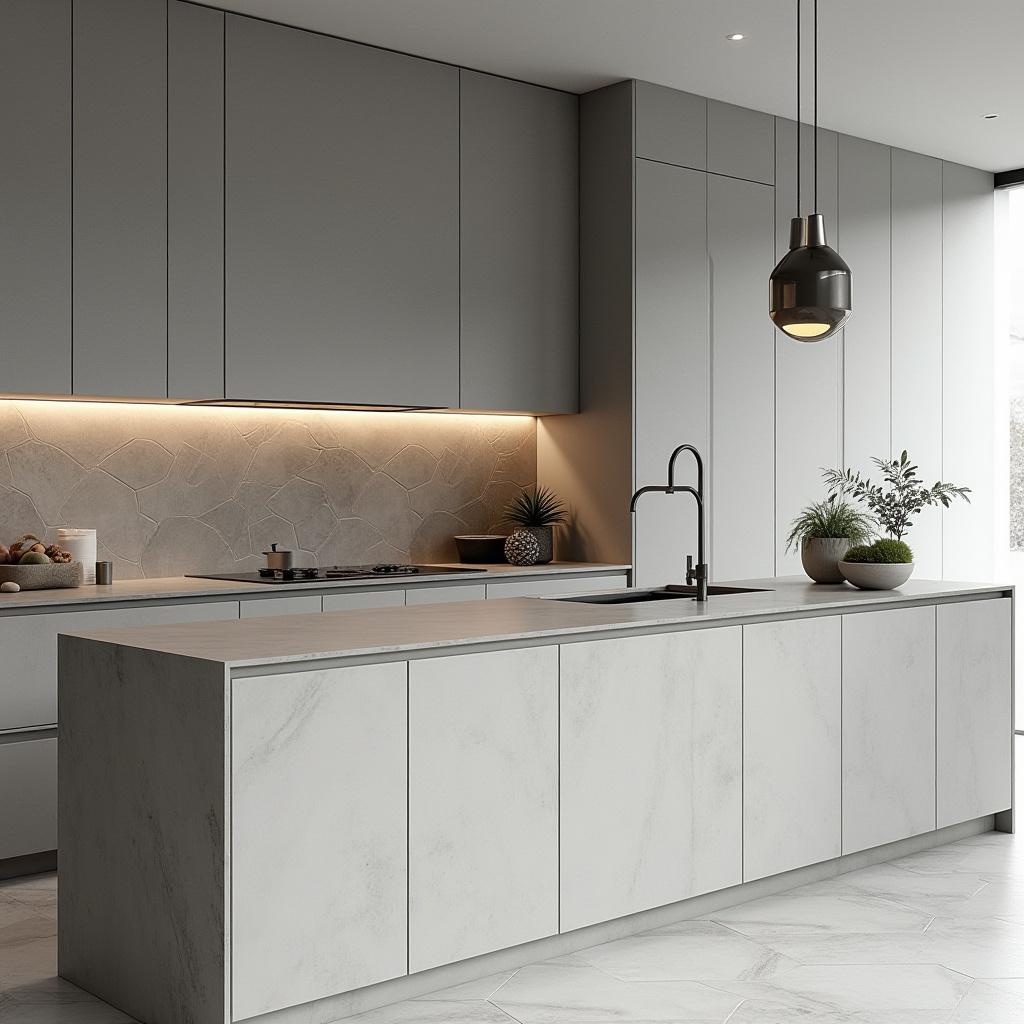
This minimalist kitchen uses shades of grey with concrete countertops and light grey cabinets to create a tranquil space. Integrated appliances maintain sleek lines, while a geometric tile backsplash adds understated interest.
Soft lighting accentuates textures, enhancing the serene atmosphere.
- Adopt a monochromatic color scheme for unity.
- Use integrated appliances for a clean look.
- Add subtle textures for depth.
- Maximize lighting to highlight materials.
- Keep decor minimal to foster calm.
Expert Tip: Utilize built-in storage to keep surfaces clear and maintain simplicity.
15. Vibrant Tropical Kitchen with Natural Accents
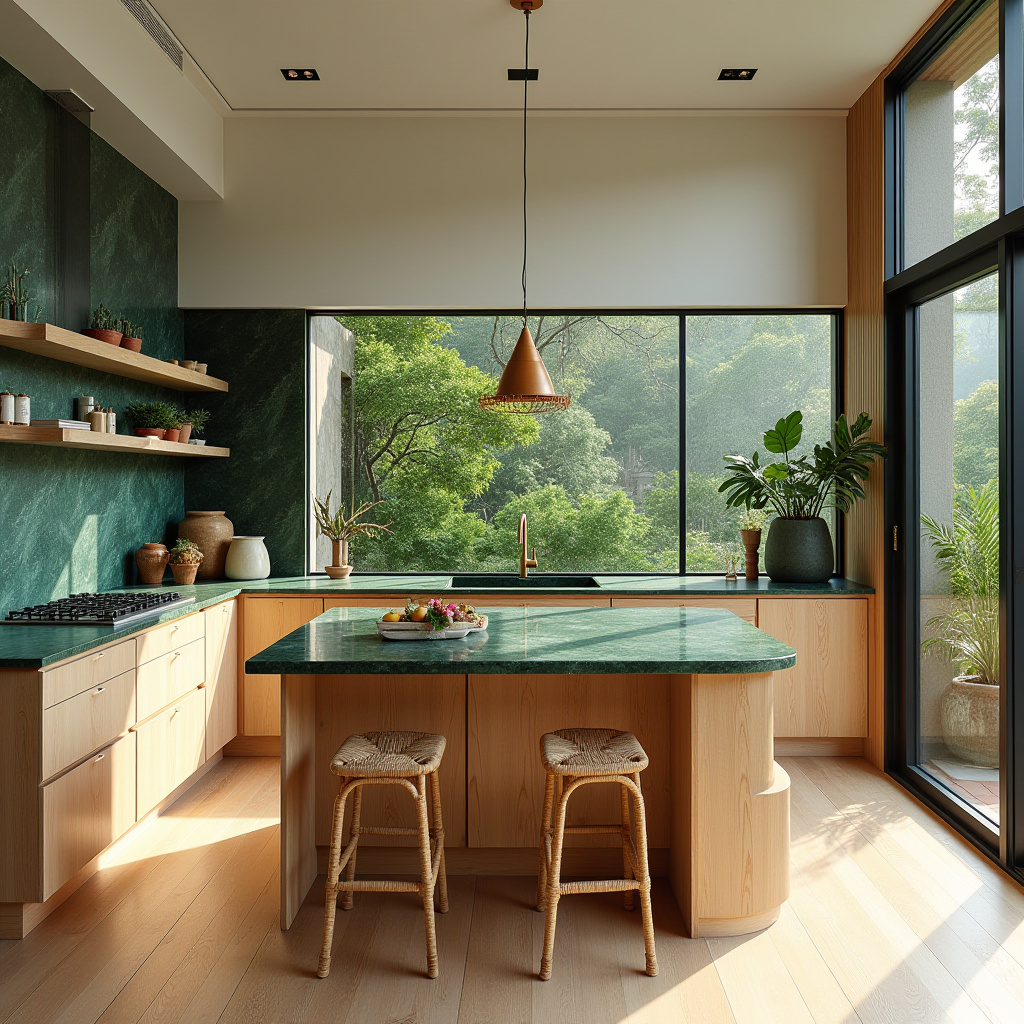
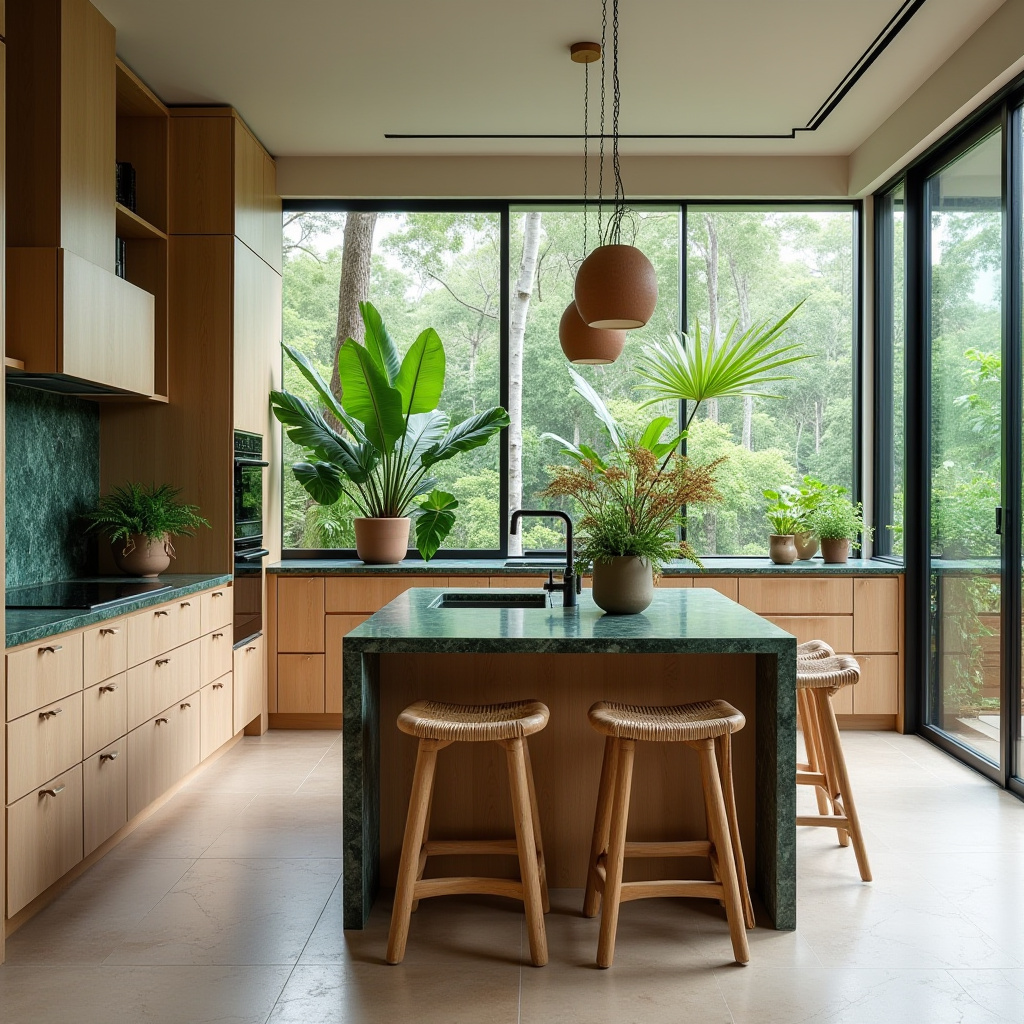
Inspired by tropical environments, this kitchen features green marble countertops and light wood cabinets that evoke island living. Rattan stools and ceramic planters bring warmth and greenery indoors.
Large windows frame lush outdoor views, filling the space with natural light and vibrant energy.
- Use bright colors and natural materials for a tropical vibe.
- Connect indoors and outdoors with large windows.
- Incorporate woven textures for warmth.
- Add plants to enliven the space.
- Maximize daylight for a cheerful atmosphere.
Expert Tip: Enhance the theme with colorful textiles and accessories for a lively feel.
16. Modular Compact Kitchen with Innovative Storage
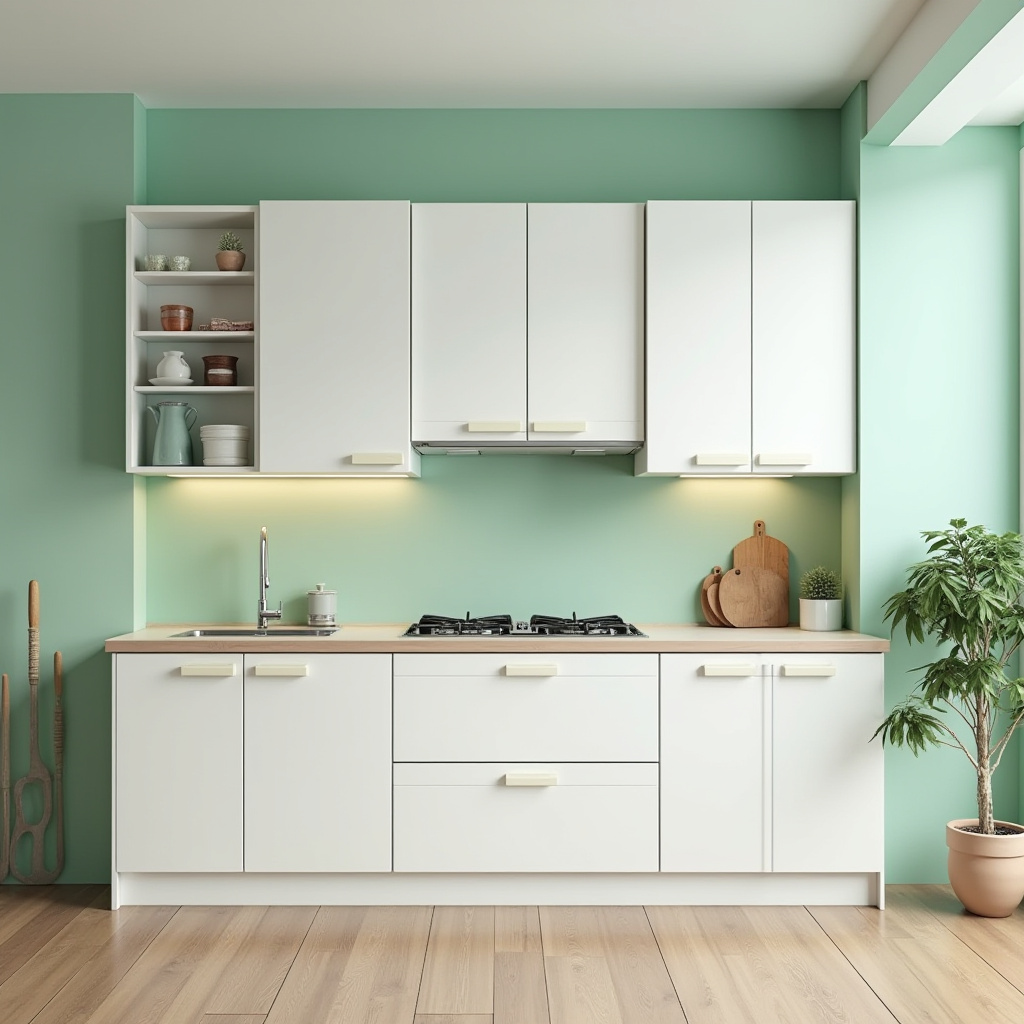
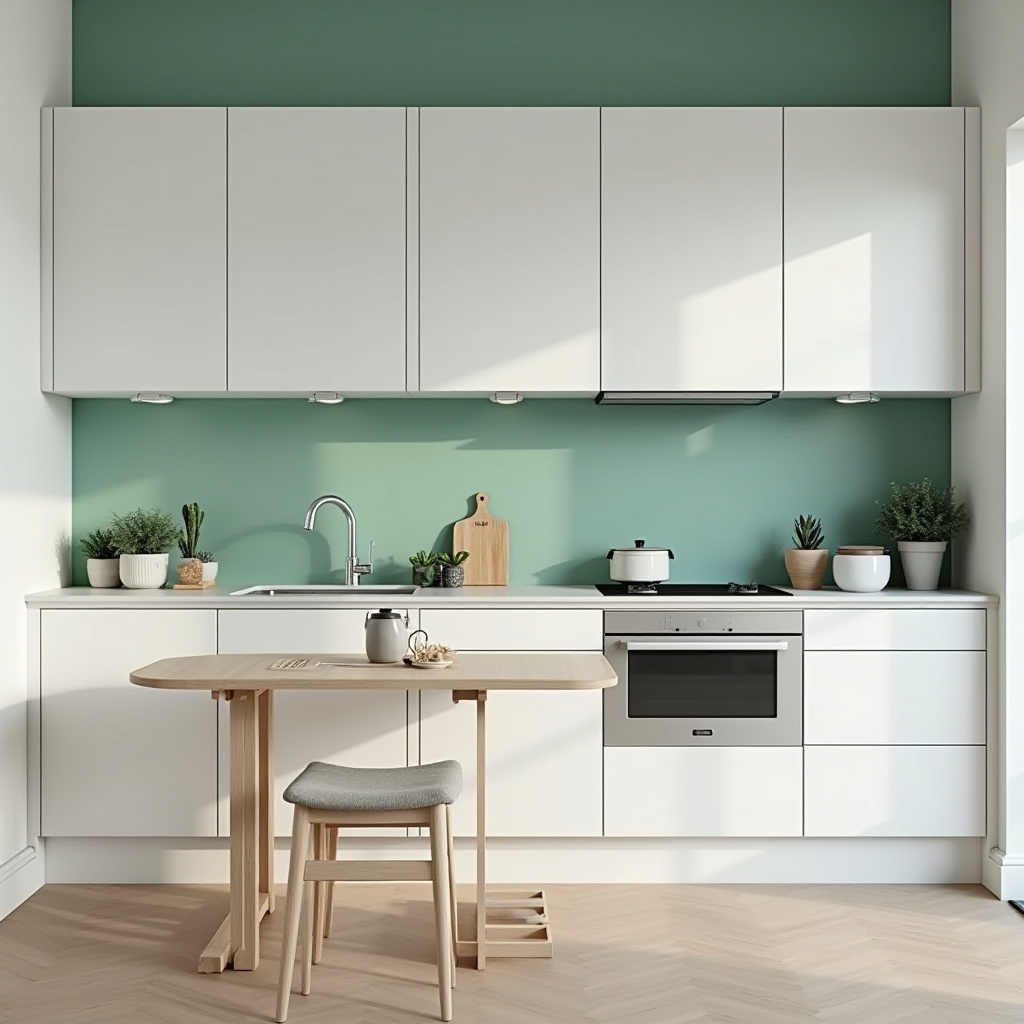
Designed for efficiency, this modular kitchen features white cabinetry and a fold-out dining table to maximize space. A mint green accent wall adds freshness, while integrated appliances keep the look streamlined.
Smart storage like pull-out shelves and magnetic strips enhance organization.
- Choose modular components for flexibility.
- Use fold-out furniture to save space.
- Light colors open up the room.
- Implement smart storage solutions.
- Maximize vertical storage with wall mounts.
Expert Tip: Opt for adaptable furniture to keep your kitchen versatile and practical.
17. Glamorous Art Deco Kitchen with Luxurious Details
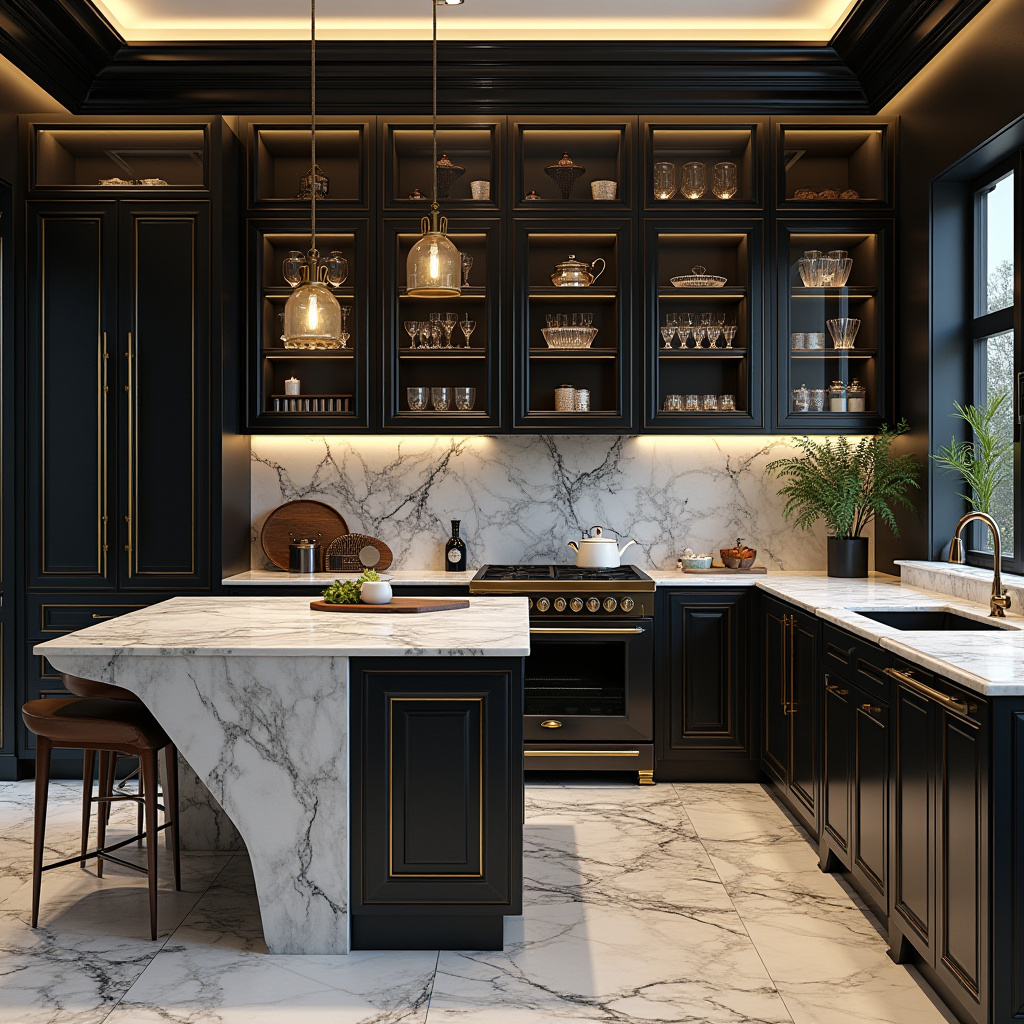
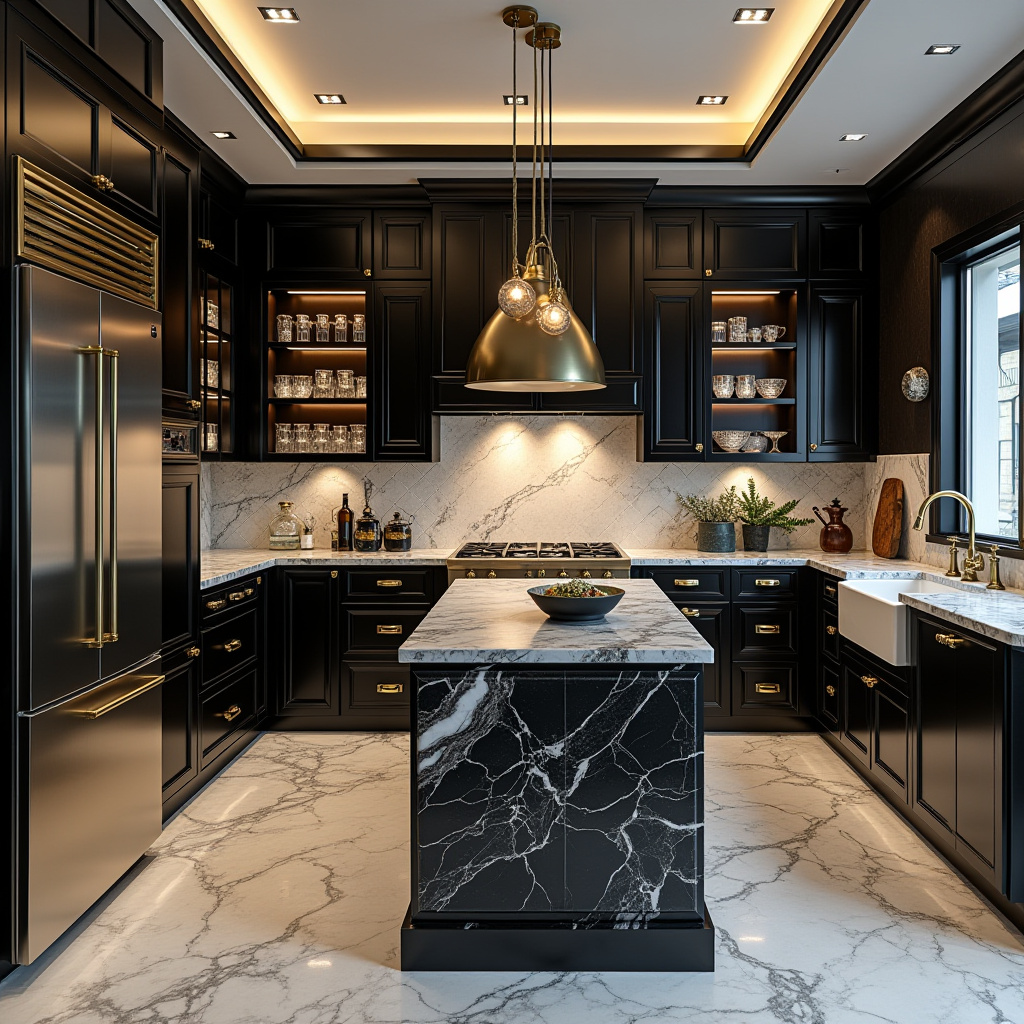
This art deco kitchen dazzles with black and white marble countertops and gold hardware. Geometric patterns and vintage-inspired appliances add elegance and nostalgia.
Crystal glassware displays and dramatic lighting complete the luxurious ambiance.
- Use bold patterns for visual drama.
- Incorporate marble and gold for luxury.
- Choose vintage-style appliances.
- Maximize lighting for glamour.
- Focus on geometric motifs.
Expert Tip: Layer different textures and materials to add depth and sophistication.
18. Alpine Rustic Kitchen with Natural Charm
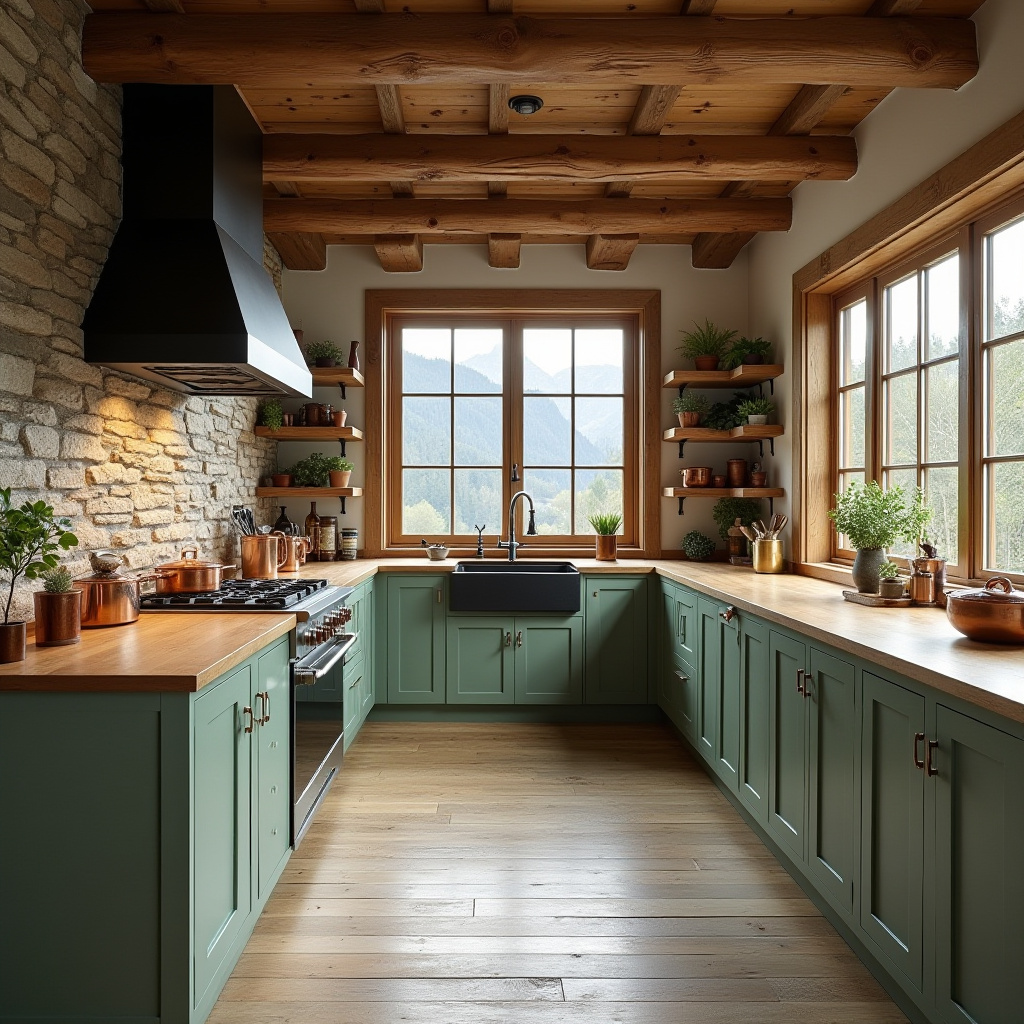
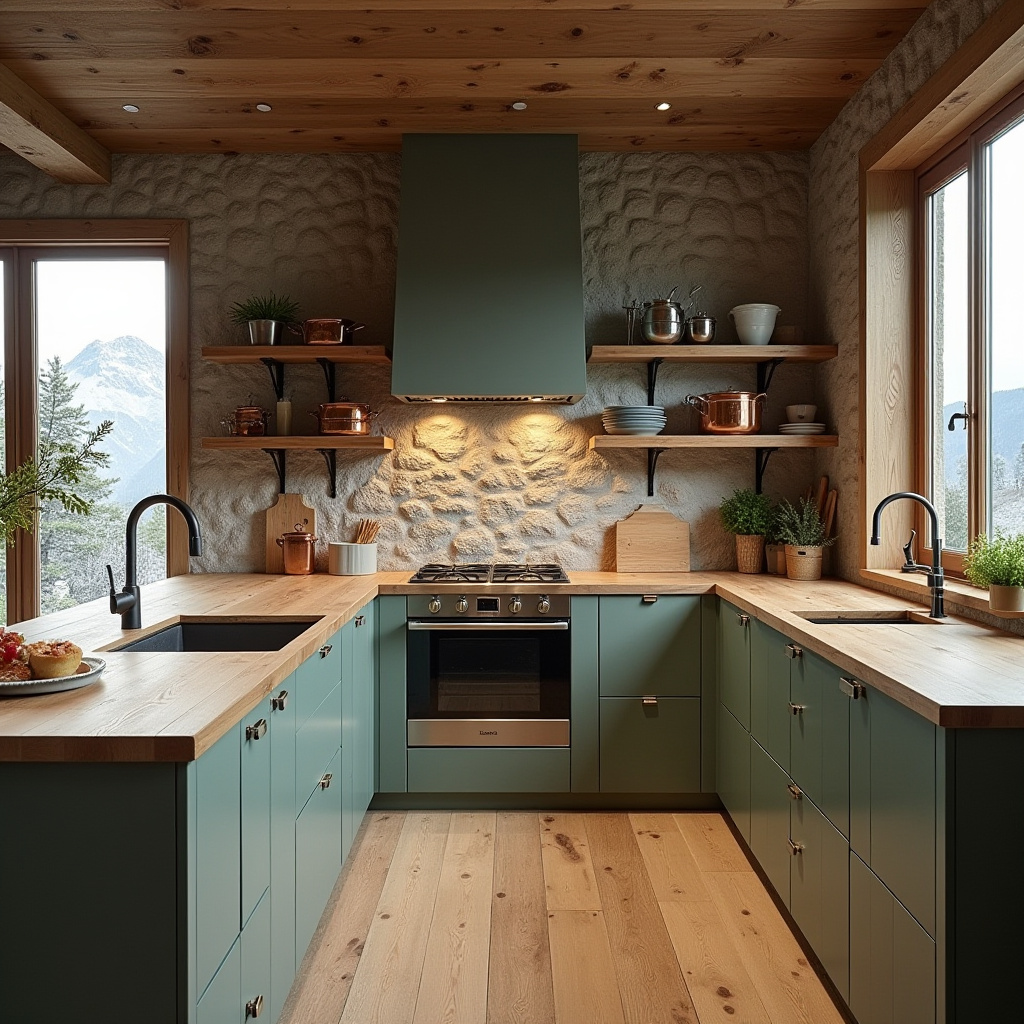
Bringing mountain lodge warmth indoors, this kitchen features wooden countertops and sage green cabinets. A stone accent wall adds texture, while open shelves display cast iron cookware.
Large windows frame stunning alpine views, filling the space with natural light and cozy ambiance.
- Use wood and stone for rustic authenticity.
- Incorporate sage green for natural harmony.
- Display vintage cast iron pieces.
- Maximize views with large windows.
- Create a cozy atmosphere with warm elements.
Expert Tip: Add woven textiles like cushions or throws to enhance comfort.
19. Cutting-Edge Kitchen with Smart Technology
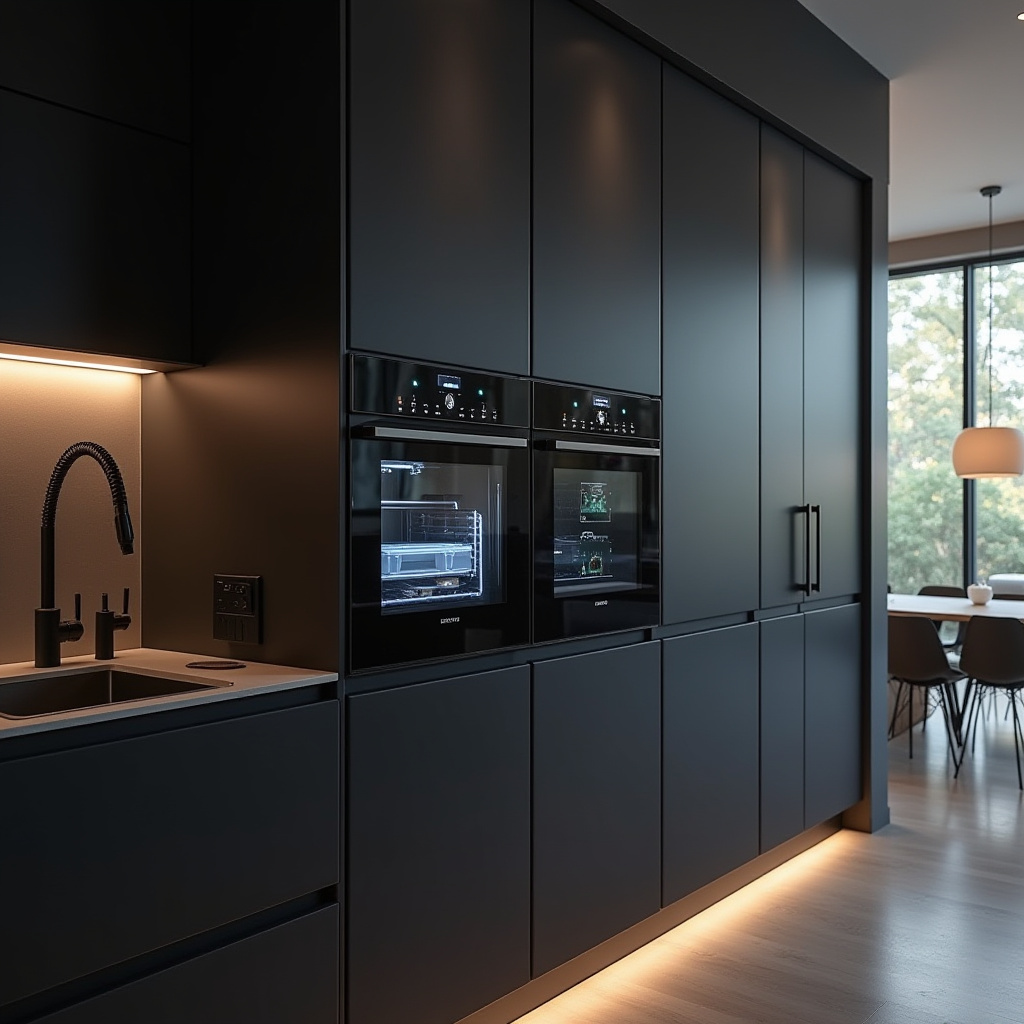
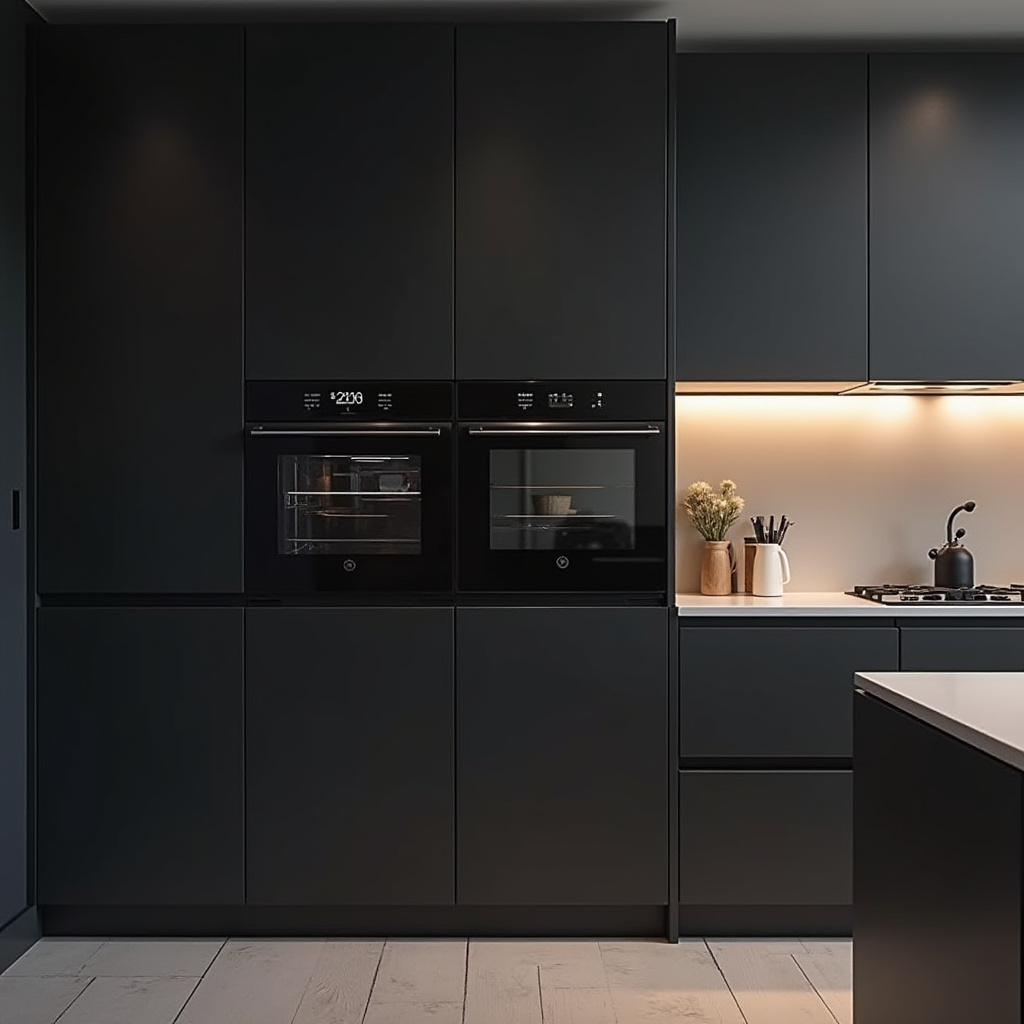
At the forefront of innovation, this kitchen features touchscreen appliances and matte black cabinetry for a sleek, sophisticated look. Smart home integrations like charging stations and concealed appliances keep the space tidy.
Ambient lighting enhances the futuristic vibe, creating a luxurious and convenient cooking environment.
- Incorporate smart appliances for modern convenience.
- Choose matte finishes for sleekness.
- Use ambient lighting to set the mood.
- Design hidden storage to reduce clutter.
- Maintain clean lines with minimal decor.
Expert Tip: Stay updated on kitchen tech trends to keep your space cutting-edge and functional.
20. Inviting Mediterranean Coastal Kitchen
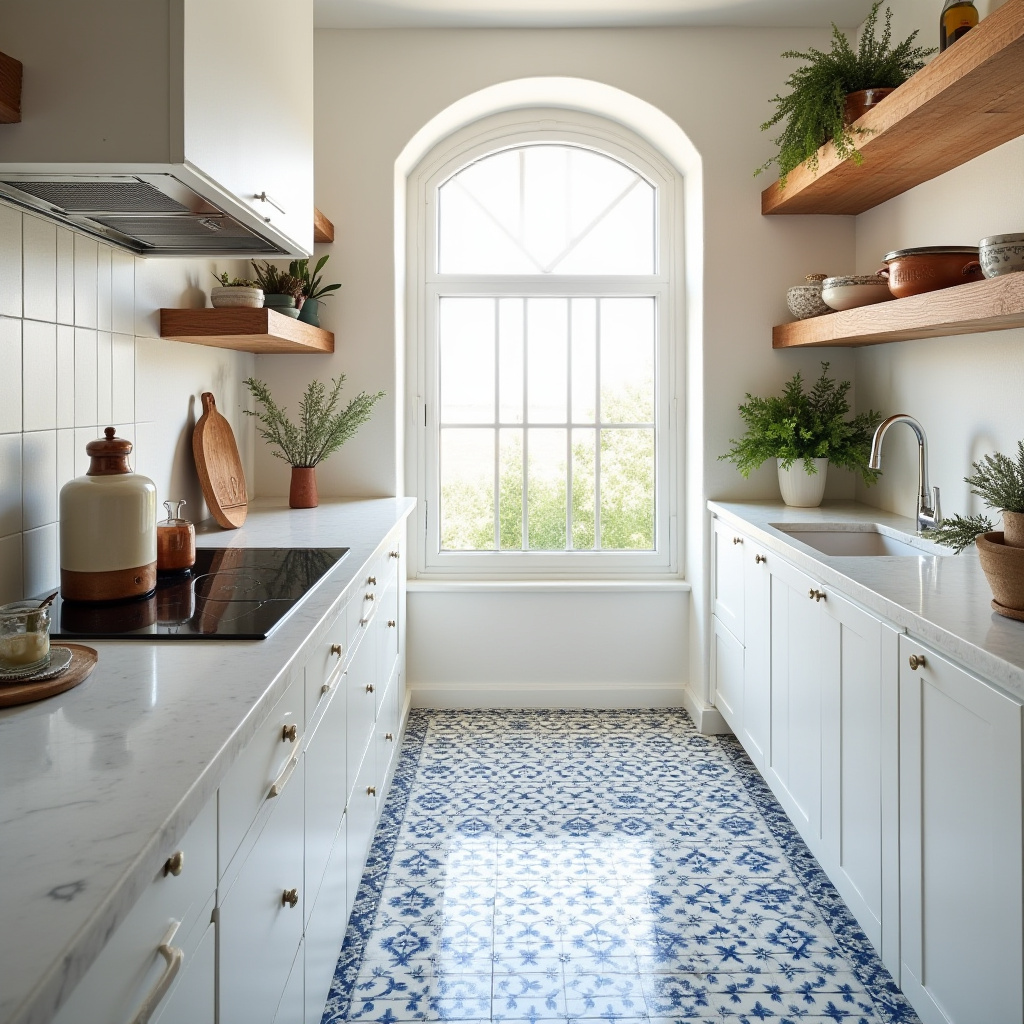
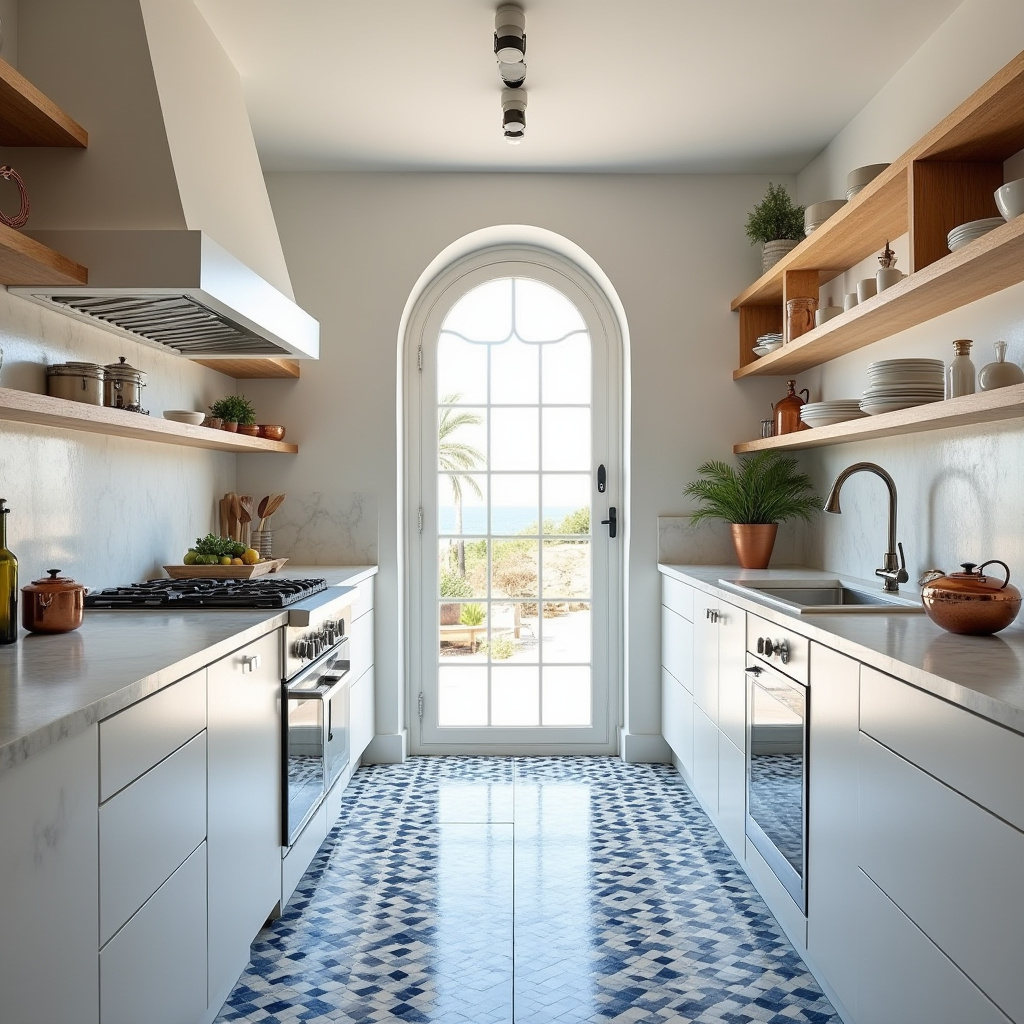
This Mediterranean coastal kitchen combines elegance with warmth, featuring vibrant blue and white tile flooring. White marble counters and open wooden shelves display charming ceramics and copper cookware.
A large arched window invites sunlight, creating a cheerful and welcoming space perfect for cooking and socializing.
- Use colorful tiles for a lively coastal feel.
- Display charming kitchenware on open shelves.
- Maximize natural light with expansive windows.
- Incorporate warm materials like wood and copper.
- Maintain a cohesive coastal-inspired palette.
Expert Tip: Add nautical-themed decor to deepen the coastal ambiance and enhance warmth.
In summary, these rectangle kitchen designs offer a wide spectrum of styles, from sleek modern minimalism to cozy rustic charm. Each concept highlights the importance of thoughtful layout and material choices to create kitchens that are both beautiful and functional.
Whether updating an existing kitchen or starting fresh, these ideas provide inspiration to craft a culinary space that reflects your unique personality and lifestyle.