
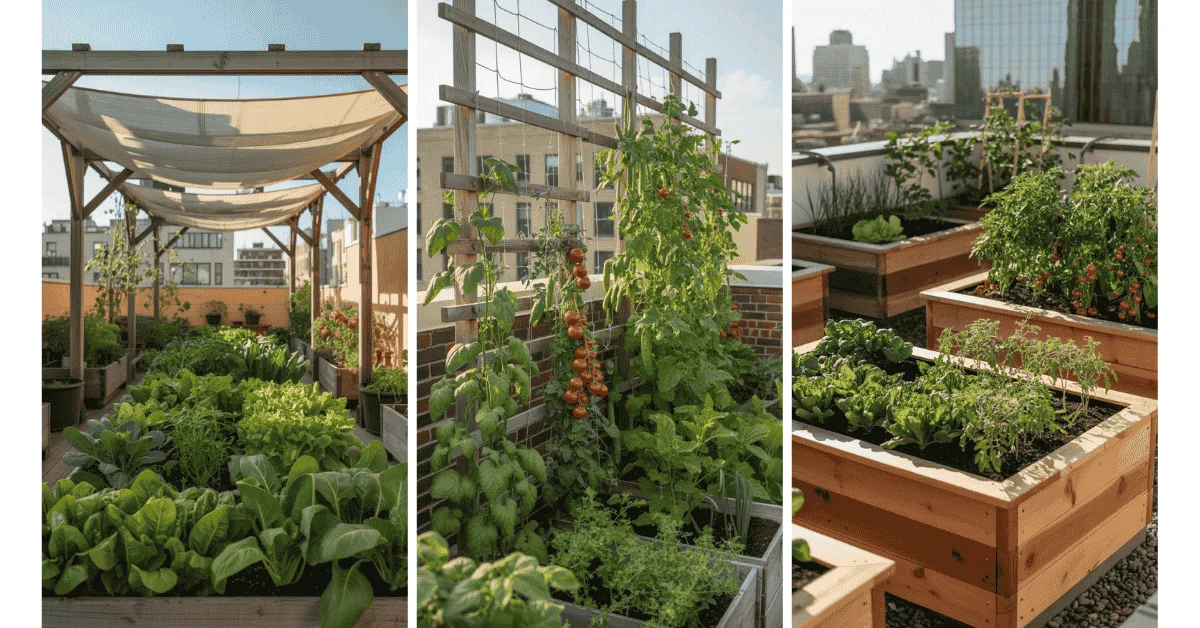
15 Innovative Rooftop Vegetable Garden Concepts to Optimize Your Urban Space
When I first moved into my city apartment, I assumed my gardening hobby was behind me-no yard meant no fresh vegetables. However, I soon realized that my rooftop held incredible potential for growing food, completely transforming my approach to urban gardening.
Rooftop vegetable gardens offer an excellent solution for cultivating fresh produce in metropolitan areas. They utilize otherwise wasted space, improve building insulation, and provide easy access to homegrown vegetables without the need for a traditional garden plot.
Below, I’ll walk you through 15 inventive strategies I’ve implemented to create a flourishing rooftop vegetable garden that’s both efficient and visually appealing.
1. Establish Raised Garden Beds for Optimal Soil Control
Save It
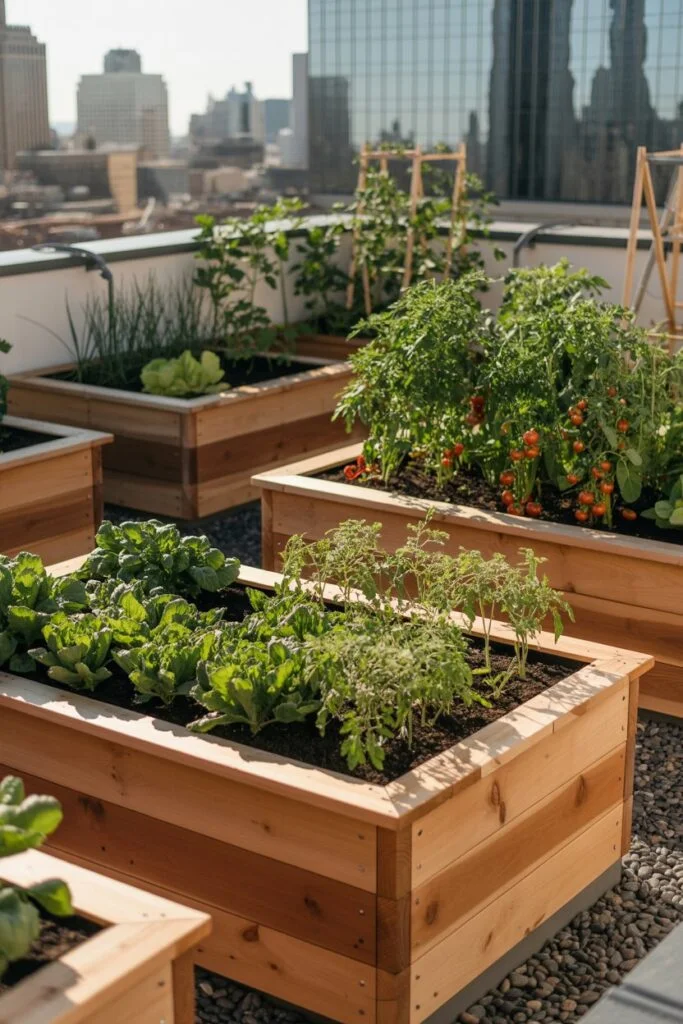
Raised beds form the backbone of my rooftop garden, offering superior control over soil composition and drainage-critical factors when gardening on a rooftop. They also minimize back strain by elevating the planting area.
I opted for cedar wood due to its natural resistance to decay, but galvanized metal beds provide a sleek, contemporary alternative. To prevent soil erosion, I always line the base with landscape fabric.
2. Opt for Lightweight, Well-Draining Soil Mixes
Save It
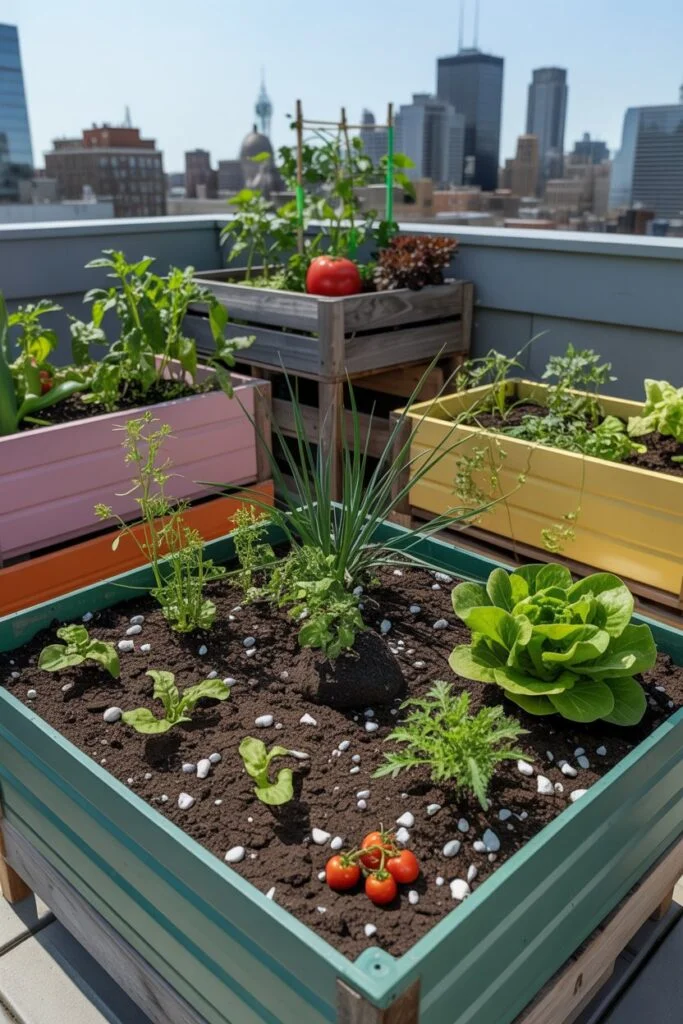
Traditional garden soil is often too heavy for rooftop structures. Instead, I use a lightweight blend of peat moss, perlite, and organic compost, which ensures excellent drainage and reduces the load on the roof.
This soil mix is ideal for container gardening, the primary method for rooftop cultivation, and supports healthy root development without risking structural damage.
3. Implement an Automated Drip Irrigation System
Save It
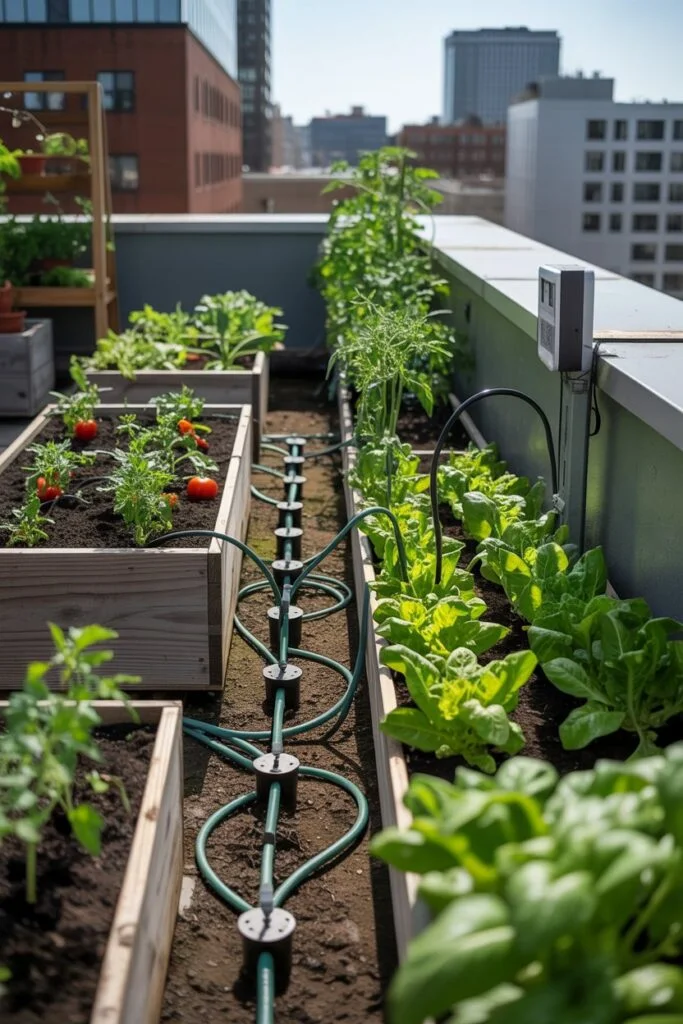
Watering can be time-consuming, so I installed a drip irrigation system that delivers water directly to plant roots, conserving water and promoting healthier growth. A timer automates watering schedules, ensuring consistent moisture even during travel.
This cost-effective setup is beginner-friendly and significantly reduces manual labor.
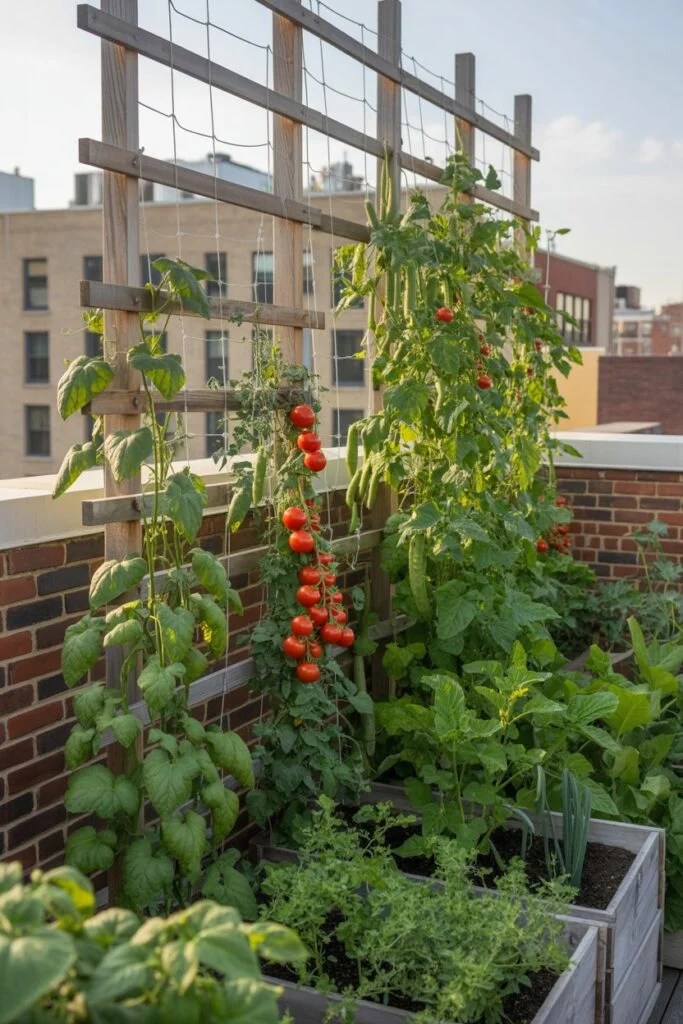
4. Maximize Vertical Space with Trellises and Climbing Supports
Save It
Given the limited floor area, I grow upwards by installing trellises to support climbing crops such as tomatoes, cucumbers, and pole beans. This vertical gardening technique expands planting capacity and enhances airflow, reducing disease risk.
From just a few square feet, I harvest an impressive yield, demonstrating the efficiency of vertical cultivation.
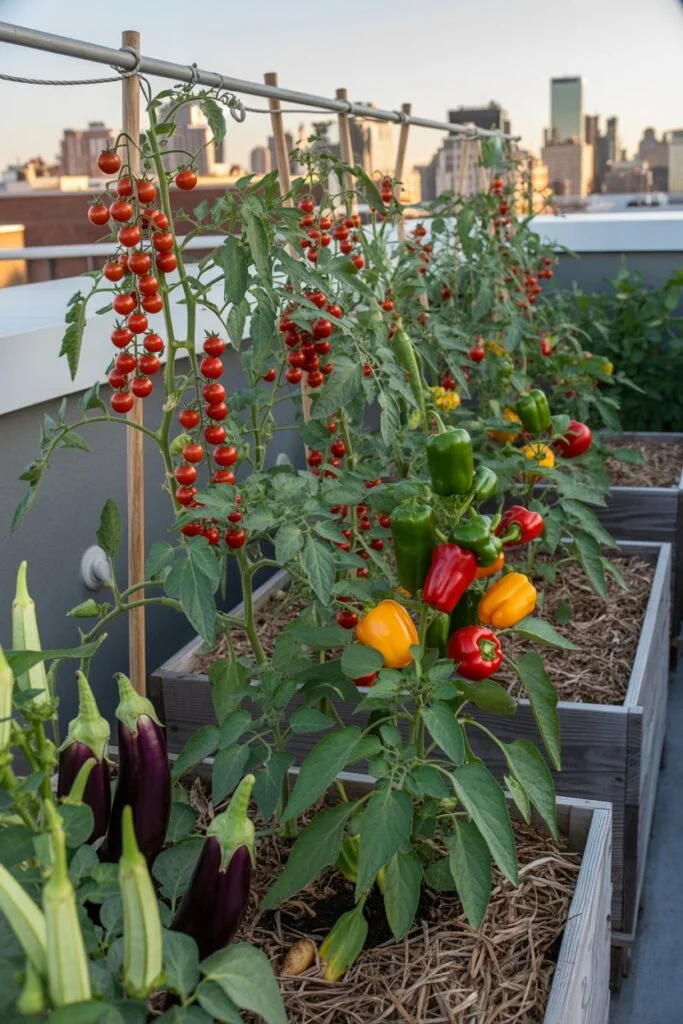
5. Select Heat-Resistant Vegetable Varieties
Save It
Rooftops often experience intense heat and sunlight. To cope, I cultivate heat-tolerant plants like cherry tomatoes, hot peppers, eggplants, and okra, which flourish under these conditions.
Applying mulch around plants helps retain soil moisture and keeps roots cool, further supporting plant health during hot spells.
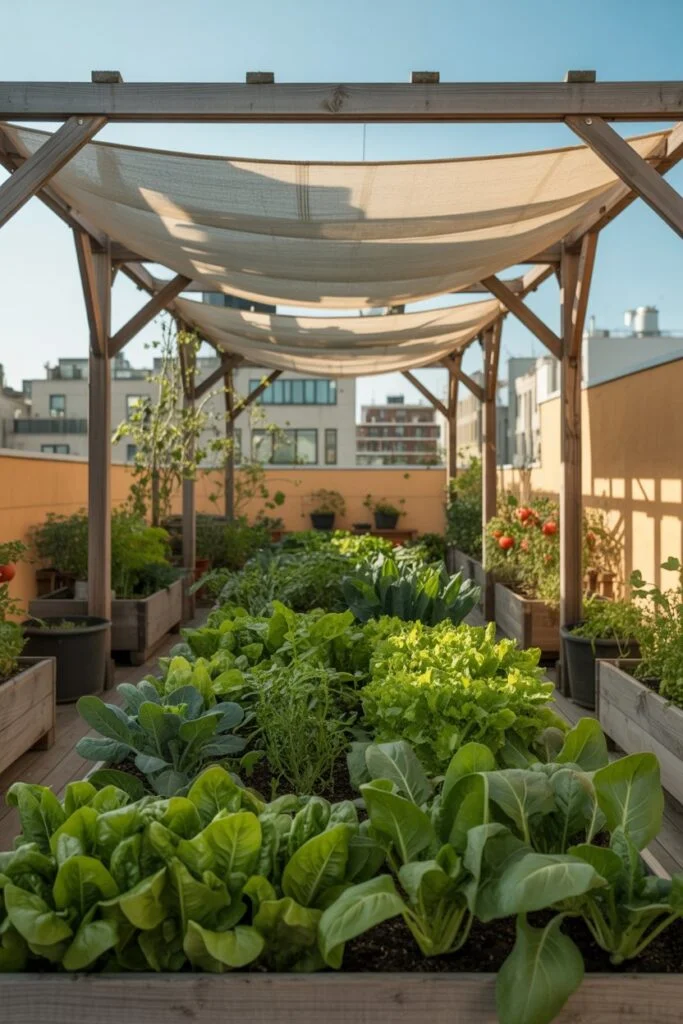
6. Provide Shade Using Pergolas or Shade Cloths
Save It
To shield sensitive plants from harsh afternoon sun, I constructed a pergola draped with shade cloth. This setup creates a cooler microenvironment, enabling me to grow leafy greens like lettuce, spinach, and arugula even during peak summer heat.
Besides functionality, the pergola adds a cozy ambiance, making the rooftop a relaxing retreat.
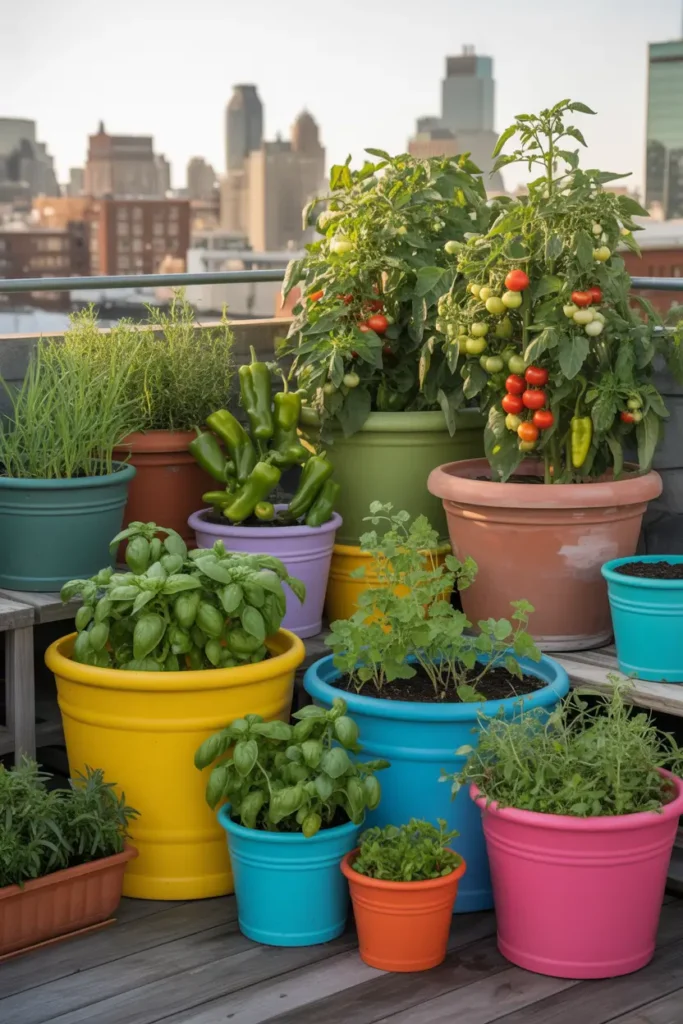
7. Utilize Containers of Varied Dimensions
Save It
Mixing container sizes allows me to accommodate a range of plants. Deep pots are ideal for root-heavy crops like tomatoes and peppers, while shallow containers suit herbs and salad greens.
Painting some containers in vibrant hues adds personality and visual appeal to the garden.
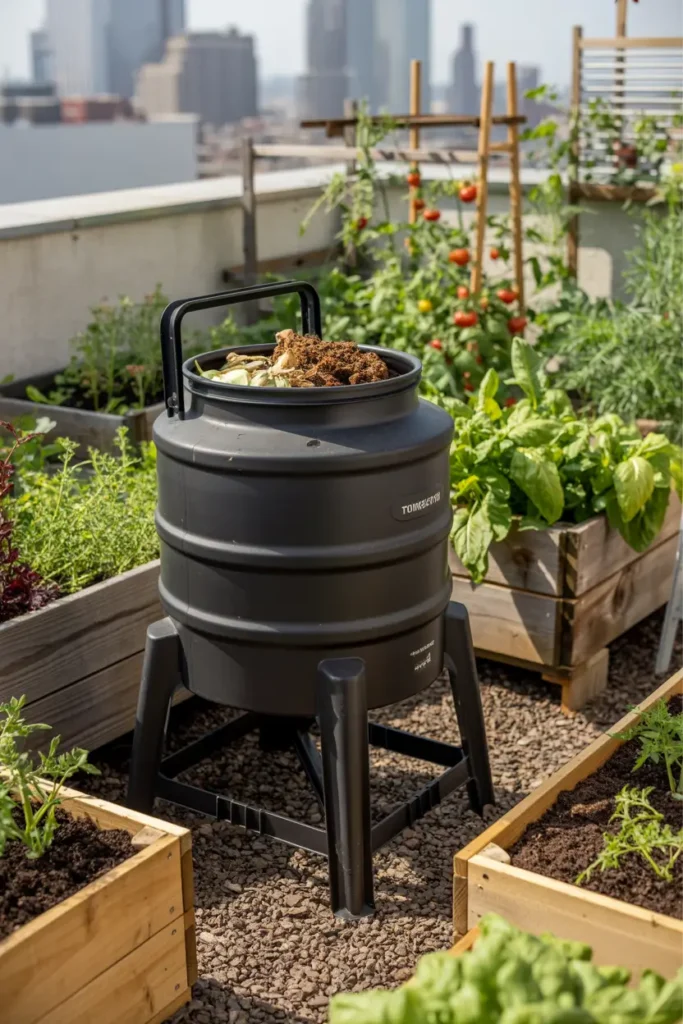
8. Incorporate a Compact Composting System
Save It
To recycle kitchen scraps and garden debris, I installed a small tumbling composter. It’s odor-free when maintained properly and produces nutrient-rich compost that nourishes my plants.
This sustainable practice reduces landfill waste and supplies organic fertilizer, enhancing soil health.
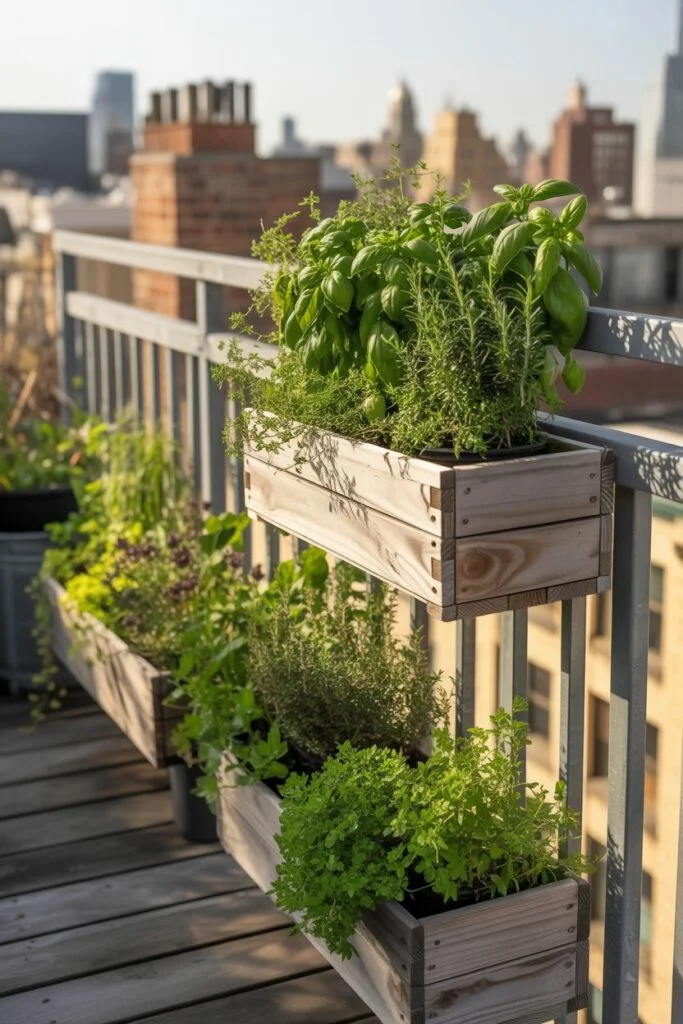
9. Grow Aromatic Herbs in Window Boxes
Save It
I mounted window boxes along the rooftop railing exclusively for herbs such as basil, thyme, rosemary, and parsley. These fragrant plants are conveniently accessible for cooking and add a pleasant aroma to the garden.
Window boxes are renter-friendly since they can be hung or clamped without damaging surfaces.
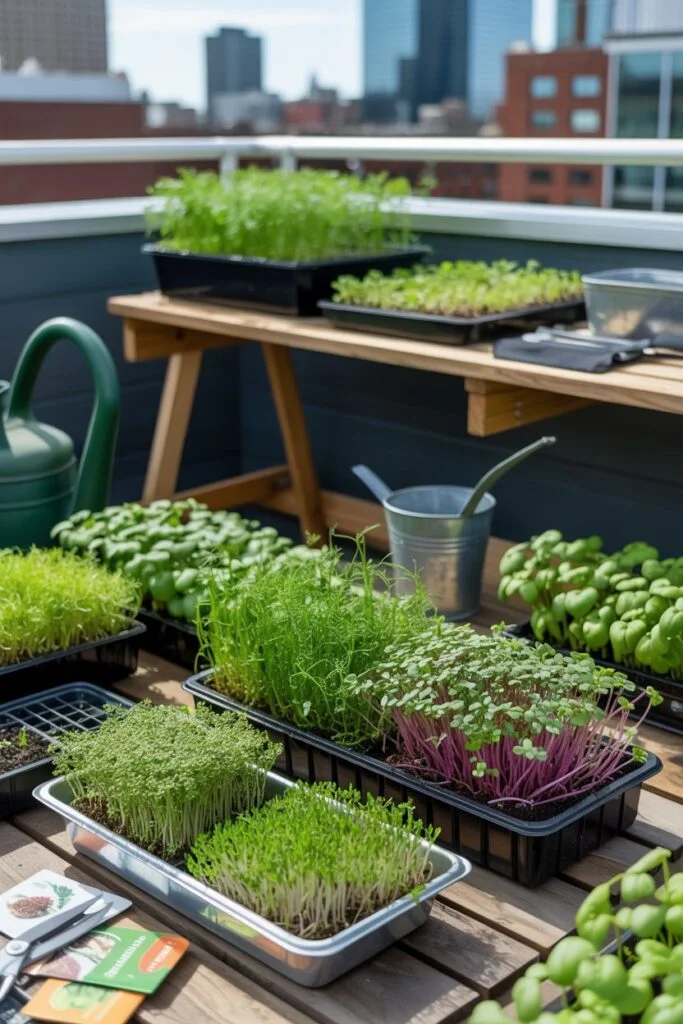
10. Cultivate Nutrient-Dense Microgreens for Rapid Harvests
Save It
For a quick supply of fresh greens, I grow microgreens in shallow trays. They mature within 7 to 14 days and are packed with vitamins, perfect for enhancing salads and sandwiches.
Microgreens require minimal space and effort, making them an excellent choice for continuous harvests on a rooftop.
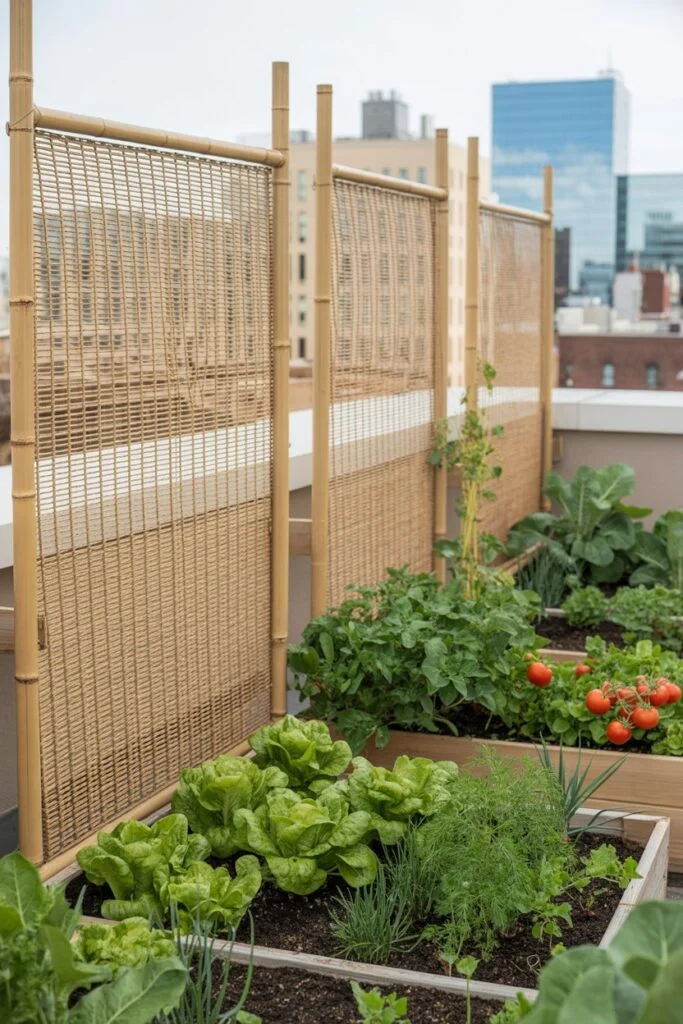
11. Protect Plants with Windbreaks
Save It
Rooftop gardens are often exposed to strong winds that can stress plants and dry out soil. I installed bamboo mesh windbreaks around the perimeter, which reduce wind velocity and help maintain soil moisture.
Alternatives include lattice panels or shade cloth, which also blend aesthetically with garden surroundings.
12. Embrace Fabric Grow Bags for Versatile Planting
Save It
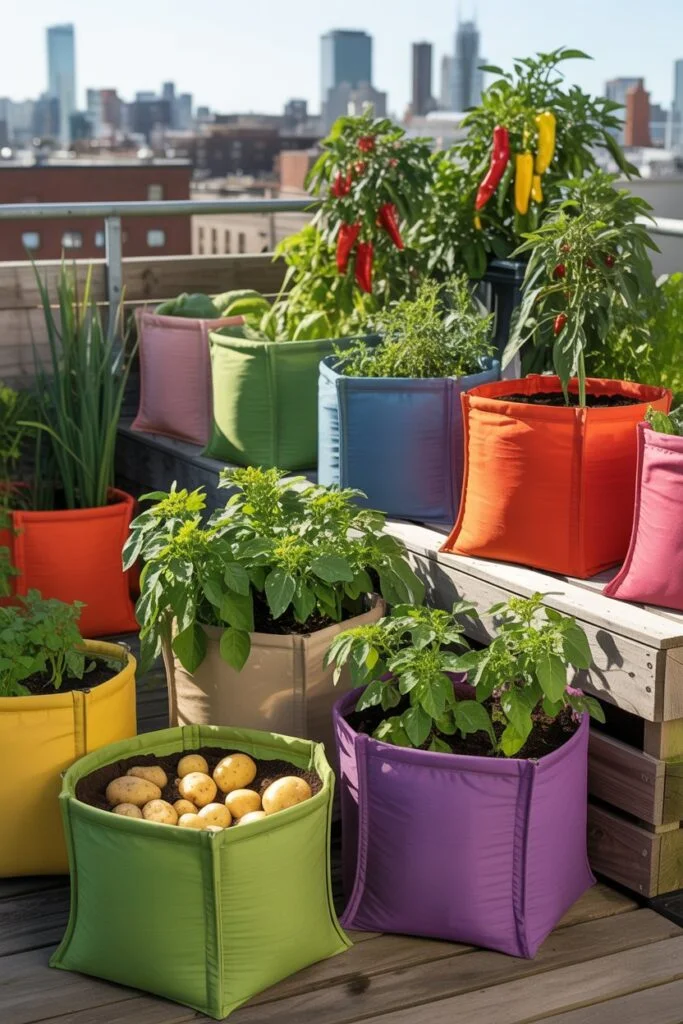
Fabric grow bags have replaced many of my traditional pots. Their breathable material encourages air pruning of roots, leading to healthier plants. They’re lightweight and easy to store, ideal for limited rooftop space.
I use them for a variety of crops, from potatoes to peppers, with excellent results.
13. Integrate Pollinator-Attracting Flowers
Save It
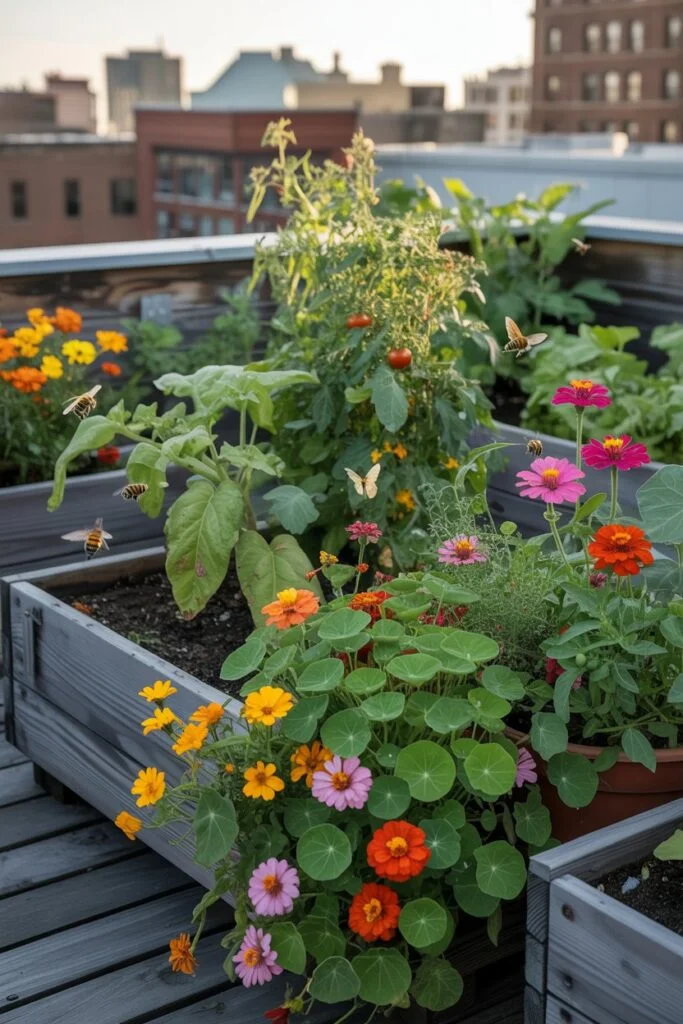
To enhance vegetable yields, I planted flowers like calendula, cosmos, and borage that attract bees and butterflies. These pollinators are essential for fruit set and overall garden health.
Additionally, these blooms add vibrant colors and some, such as borage, are edible, enriching salads with unique flavors.
14. Utilize Self-Watering Containers for Consistent Moisture
Save It
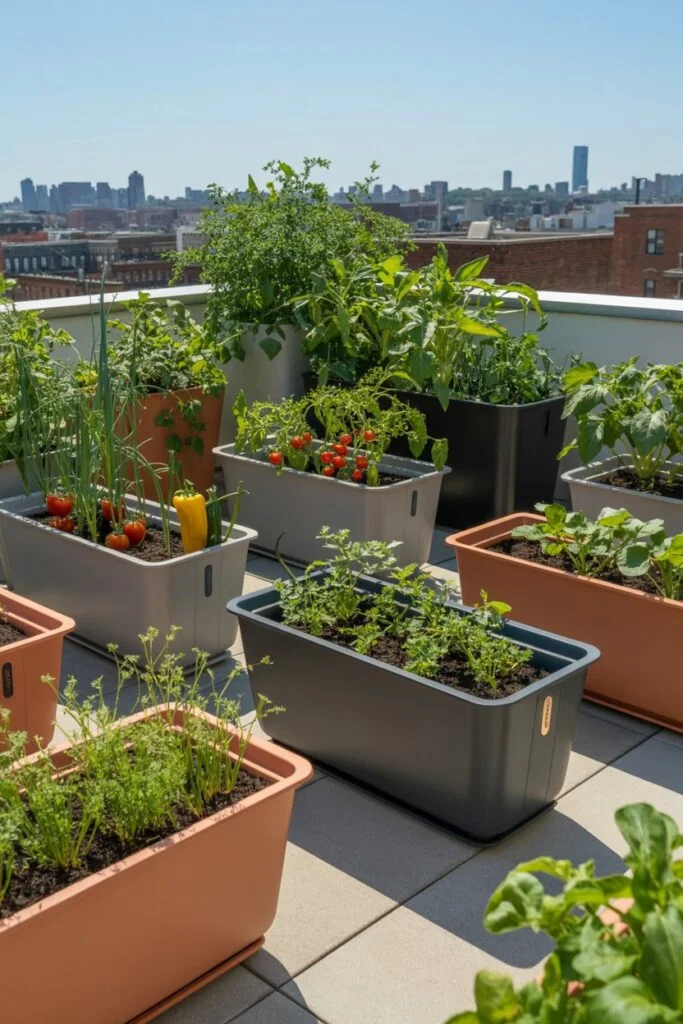
During hot weather, plants can dry out rapidly. Self-watering containers with built-in reservoirs maintain steady soil moisture, reducing the risk of wilting and root rot.
This system is especially helpful when I’m away, as plants can access water as needed without daily attention.
15. Construct a Mini Greenhouse for Extended Growing Seasons
Save It
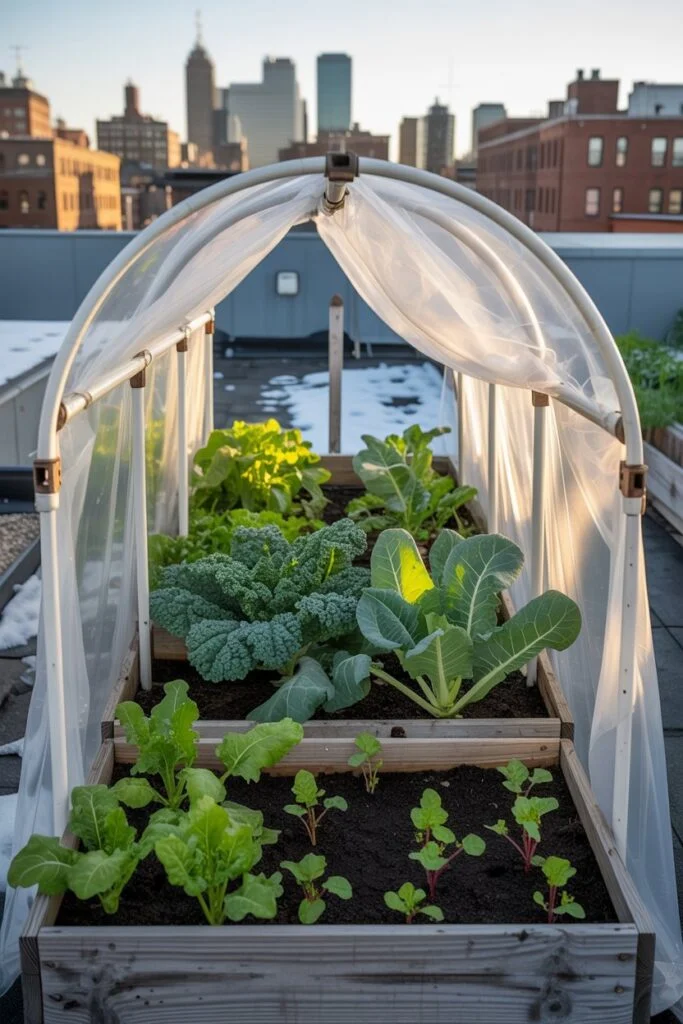
To prolong my gardening season, I built a compact hoop house using PVC pipes and clear plastic sheeting. This mini greenhouse shields plants from frost, enabling me to grow hardy vegetables like kale and Swiss chard well into winter.
It also allows for earlier seed starting in spring, effectively turning my rooftop into a year-round growing space.
Final Thoughts
Transforming a rooftop into a vegetable garden has revolutionized my urban lifestyle. With thoughtful design and a few smart techniques, you can convert unused rooftop areas into productive, attractive gardens that supply fresh vegetables throughout the year.
Try implementing one or two of these ideas to begin your rooftop gardening journey and watch your green space thrive.